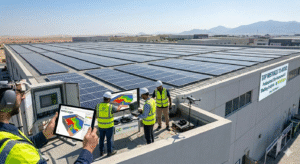
As solar power continues to dominate renewable energy growth, effective energy storage has become the biggest enabler for reliable, 24/7 clean power. In 2026, solar energy storage is undergoing a rapid transformation — moving beyond traditional lithium-ion batteries toward more affordable, safer, longer-duration, and sustainable solutions.
From sodium-ion batteries scaling commercially to advanced flow batteries for multi-day storage, 2026 marks a turning point where energy storage shifts from an optional add-on to an essential component of every solar installation. At Watts & Ergon, , we help businesses and industries in Dubai and across the UAE integrate these cutting-edge storage technologies for maximum efficiency and energy independence.
Why Energy Storage Innovations Matter in 2026
- Overcomes solar intermittency for consistent power supply
- Enables participation in dynamic pricing and virtual power plants (VPPs)
- Reduces reliance on the grid and lowers electricity bills
- Supports long-duration storage for industrial and utility-scale solar projects
- Improves safety, sustainability, and cost-effectiveness of solar systems
Key Trend in 2026: Energy storage is no longer just lithium-ion. Non-lithium technologies like sodium-ion and flow batteries are moving from pilot projects to commercial deployment at scale.
1. Sodium-Ion Batteries – The Cost-Effective Alternative
Sodium-ion batteries have emerged as one of the biggest breakthroughs in 2026. Using abundant and low-cost sodium instead of lithium, they offer excellent safety, strong performance in extreme temperatures, and competitive cycle life for stationary storage. Major manufacturers like CATL have launched dedicated sodium-ion platforms for grid-scale and commercial solar storage.
2. Flow Batteries for Long-Duration Storage
Vanadium redox and other flow batteries are gaining traction for applications requiring 8–100+ hours of storage. Their ability to decouple power and energy capacity makes them highly scalable for large solar farms, allowing excess daytime solar energy to be stored for evening or even multi-day use.
3. Advances Toward Solid-State Batteries
Solid-state and semi-solid batteries promise higher energy density, faster charging, and dramatically improved safety by replacing flammable liquid electrolytes. While full commercialization for mass solar storage is still progressing, hybrid designs and early deployments are appearing in high-value applications.
4. AI-Powered Smart Energy Management Systems
Artificial intelligence now optimizes charge/discharge cycles, predicts solar generation and consumption patterns, and integrates with smart grids and EVs for maximum efficiency and revenue generation.
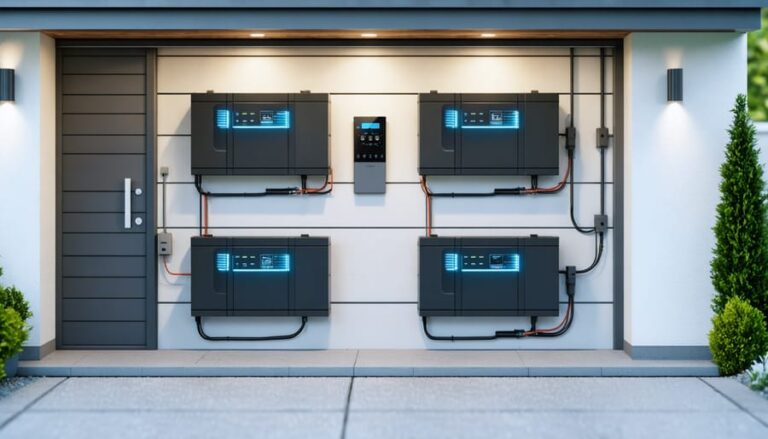
5. Modular & Stackable Systems
Plug-and-play modular batteries allow easy scaling from residential rooftops to industrial facilities, reducing upfront costs and simplifying installation.
Comparison of Solar Energy Storage Technologies in 2026
| Technology |
Energy Density |
Cycle Life |
Cost Trend ($/kWh) |
Best For |
Key Advantage in 2026 |
| Lithium-Ion (LFP) |
150–250 Wh/kg |
5,000–8,000+ |
200–400 |
Home & Commercial Solar |
Mature, high efficiency |
| Sodium-Ion |
100–175 Wh/kg |
3,000–6,000 |
100–300 |
Grid & Stationary Storage |
Lower cost, abundant materials, safer |
| Flow Batteries (Vanadium/others) |
Lower (scalable) |
10,000–20,000+ |
300–600 (declining) |
Long-Duration (8–100 hrs) |
Excellent for multi-day solar shifting |
| Solid-State / Semi-Solid |
300–500+ Wh/kg |
5,000–10,000+ |
Higher (emerging) |
High-Performance Applications |
Superior safety & density |
| Iron-Air / LDES |
Low–Medium |
Very High |
Competitive for long duration |
Utility-Scale Multi-Day |
100-hour+ storage capability |
In regions like the UAE with high solar irradiance, advanced storage solutions deliver:
- Peak shaving and demand charge reduction
- Backup power during grid outages
- Higher return on investment through energy arbitrage
- Compliance with net metering and green building regulations
- Integration with EV charging and microgrids
Best Practices for Implementing Solar Storage in 2026
- Conduct detailed load and solar generation analysis
- Choose the right chemistry based on duration needs (short vs long)
- Prioritize systems with advanced Battery Management Systems (BMS) and AI optimization
- Plan for future expansion with modular designs
- Partner with experienced integrators who understand local regulations and climate conditions
At Watts & Ergon, we specialize in designing and implementing cutting-edge solar energy storage systems tailored for industrial, commercial, and utility-scale projects in Dubai and the UAE.
Whether you need high-efficiency lithium systems, cost-effective sodium-ion solutions, or long-duration flow battery setups — our experts deliver optimized, reliable, and future-ready energy storage.