
EV Charging Solutions
Watts & Ergon delivers electrical infrastructure and installation services for EV charging in Dubai, from residential AC chargers to commercial charge-point deployments. Every installation is engineered around your property’s actual electrical capacity — not a generic template. Request a free load assessment today!
EV Charging Solutions cover the full electrical scope behind a working charge point: load assessment, circuit design, charger supply and installation, and commissioning — for villas, apartment buildings, and commercial or industrial sites.
As EV adoption grows across the UAE, the electrical infrastructure behind a charger matters as much as the charger itself. A charge point is only as reliable as the circuit, protection, and earthing behind it — and an undersized supply or poorly specified installation can trip breakers, damage the vehicle’s onboard charger, or simply fail to deliver the charging speed a homeowner or fleet operator expects. Watts & Ergon approaches every EV charging project as an electrical engineering task first: assessing the existing supply, calculating real-world load, and only then specifying and installing hardware suited to the site.
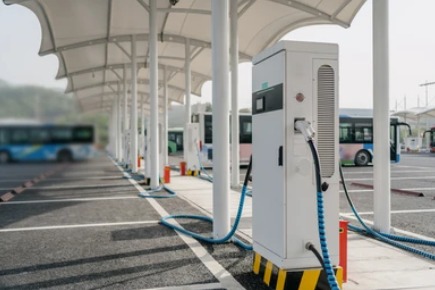
Residential & Commercial AC Charger Installation
Most EV charging in the UAE today is AC (alternating current) charging — typically a 7kW to 22kW wallbox using a Type 2 connector, the standard across the region. For villas, this means a dedicated circuit sized correctly against the property’s existing DB capacity; for commercial and multi-unit residential sites, it means coordinating multiple charge points on a shared supply without overloading the building’s infrastructure.
Watts & Ergon handles the complete electrical scope: dedicated circuit design, cable sizing and routing, RCD/RCBO protection selection, and final connection to the charger unit. For commercial sites — offices, retail, staff parking, fleet depots — we also handle load balancing between multiple charge points so simultaneous charging doesn’t trip the main incomer.
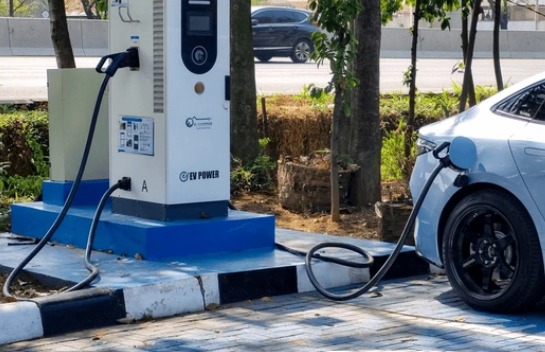
Electrical Infrastructure & Load Assessment
Before any charger is specified, we assess the property’s existing electrical capacity: the size of the incoming supply, how much headroom exists above current peak demand, and what upgrades — if any — are needed to add EV charging safely. This is the step that’s most often skipped by installers who simply mount a charger on the nearest wall, and it’s the step that determines whether the installation is safe and reliable for years, not just on day one.
For villas already close to their DB’s rated capacity, this can mean recommending a smaller charger, a load-management device that limits EV charging when other high-draw appliances are active, or in some cases a supply upgrade coordinated with DEWA. For commercial sites planning multiple charge points, load assessment is what determines whether the site needs 2 chargers or 20 — and whether the existing transformer capacity can support the plan at all.
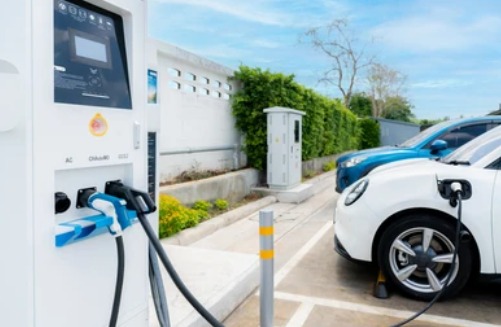
Full-Scope EV Charging: From Assessment to Commissioning
What's Included
- Site & Load Assessment: Evaluating existing electrical capacity and identifying the safest, most cost-effective charging setup for the property.
- Charger Integration & Commissioning: Supply, installation, and commissioning of AC charge points from established manufacturers, tested and verified before handover.
- Circuit & Protection Design: Dedicated circuits sized to the charger and property, with correct RCD/RCBO protection per DEWA and IEC wiring regulations.
- Multi-Charger Load Balancing: For commercial and multi-unit sites, coordinating several charge points on shared infrastructure without overloading the supply.
Who This Is For
- Villa owners adding a home charger for a personal EV.
- Property developers and facility managers adding charge points to parking for residents or tenants.
- Commercial and industrial sites building fleet-charging or staff/visitor charging infrastructure.
FAQs
Most UAE villas use a 7kW single-phase or up to 22kW three-phase AC wallbox with a Type 2 connector — the regional standard. The right size depends on your vehicle’s onboard charger and, critically, how much spare capacity your existing electrical supply has. We assess this on-site before recommending a specific charger rather than defaulting to the largest available unit.
Not always. Many villas have enough headroom on their existing DB to add a 7kW charger safely. Larger chargers, or homes already running near capacity with AC and other high-draw appliances, may need a load-management device or, less commonly, a supply upgrade coordinated with DEWA. This is exactly what our load assessment is designed to determine before any hardware is installed.
Yes. For multi-unit and commercial sites we design shared-infrastructure installations with load balancing, so multiple vehicles can charge simultaneously without exceeding the building’s incoming supply capacity. This is a standard part of our electrical infrastructure and load assessment scope for larger sites.
A single residential charger installation, once the load assessment and any required approvals are complete, is typically a one-day job. Commercial multi-charger installations take longer depending on the number of charge points and any supply upgrade work involved.
Yes. EV charging installations follow the same DEWA electrical regulations and IEC wiring standards as the rest of our electrical engineering and contracting work, and are delivered under our ISO 9001, ISO 14001, and ISO 45001-aligned management systems.