DEWA Solar Regulations in Dubai:
At Watts & Ergon, we specialise in DEWA-enrolled solar solutions and handle the entire process end-to-end.

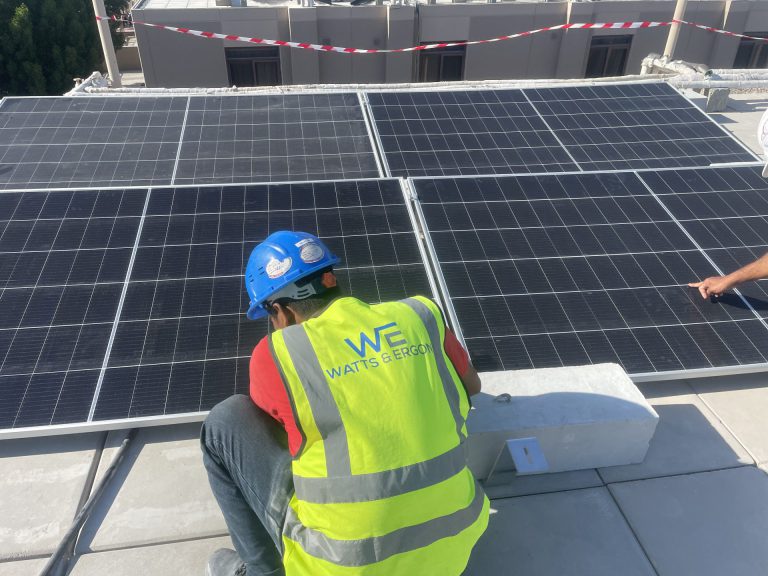
Dubai’s abundant sunshine and clear regulatory framework make rooftop solar one of the smartest investments property owners can make. The entire process is governed by DEWA (Dubai Electricity and Water Authority) under the Shams Dubai programme, which is based on Executive Council Resolution No. 46 of 2014 and the latest Connection Conditions (Version 4.1).
This guide explains everything you need to know as a residential, commercial, or industrial property owner so you can install solar correctly the first time — fully compliant, safely connected, and ready to start saving on your electricity bills.
At Watts & Ergon, we specialise in DEWA-enrolled solar solutions and handle the entire process end-to-end.
Shams Dubai is DEWA’s distributed renewable energy programme that allows property owners to install grid-connected solar photovoltaic (PV) systems. You generate electricity for your own use. Any surplus is exported to the DEWA grid and credited against future consumption through net metering. There is no cash payment for excess energy — only bill credits.
Key principles:
DEWA limits solar capacity based on your property’s Total Connected Load (TCL). The maximum is capped at 1,000 kW (1 MW) per plot.
Approximate capacity allowances (simplified from the official slab table):
| TCL Range | Allowed Share of TCL | Cumulative Max Capacity |
|---|---|---|
| 0–100 kW | 100% | 100 kW |
| 100–200 kW | 75% | 175 kW |
| 200–400 kW | 50% | 275 kW |
| 400–600 kW | 25% | 325 kW |
| Above 600 kW | 5% | Up to 1,000 kW |
Your approved contractor calculates the exact allowable size during the design stage. Larger industrial projects may also explore the separate D33 Solar PV Initiative (for eligible manufacturing, data centres, and agri-tech companies), which can allow higher captive capacity.
Free-standing ground-mounted arrays are not eligible under standard Shams Dubai rules (except under specific commercial arrangements or grandfathered older systems).
This structure delivers strong bill savings, especially for properties with high daytime consumption.
DEWA has streamlined the process into a single online application for Solar NOC + Design Approval + Connection.
Typical total timeline: 4–12 weeks from engagement to go-live when documentation is complete and the contractor is experienced.
Your contractor prepares most of these, but you will need to provide ownership/identity documents:
Additional building permits from Dubai Municipality, Trakhees, or the relevant free-zone authority may be required for structural works.
Using non-approved equipment is one of the most common reasons for rejection or disconnection.
There are currently no direct cash subsidies for most residential and commercial systems — the financial return comes entirely from bill savings via net metering.
As a DEWA-enrolled Electrical & DRRG Solar PV contractor, Watts & Ergon manages the complete journey:
We ensure your project is compliant from day one, minimising delays and maximising long-term performance.
Yes. All grid-connected systems require Shams Dubai approval.
Only with written consent from the property owner / landlord and proper account arrangements. Roof rights must be clarified.
Yes — up to 1 MW per plot, subject to your Total Connected Load calculation.
Indefinitely — they roll over until used against future consumption on the same plot.
The application is free. A connection/meter fee usually applies (typically modest relative to total project cost). Larger systems may incur additional grid-integration costs.
At Watts & Ergon, we specialise in DEWA-enrolled solar solutions and handle the entire process end-to-end.
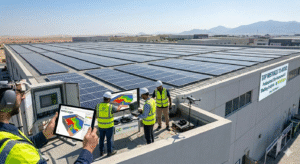
Solar panels convert light, not heat, into electricity. When they get hotter, their efficiency drops. Understanding this effect — and how to minimize it — is essential for anyone installing or operating solar systems in Dubai and the wider UAE.
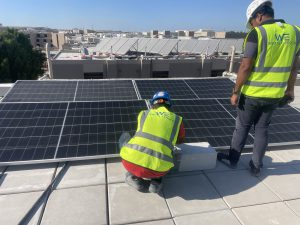
This guide breaks down the key DEWA solar regulations you need to know — system size limits, technical standards, approval process, equipment rules, and common compliance pitfalls — so you can install solar correctly the first time with a trusted DEWA-enrolled contractor like Watts&ergon.