As Dubai accelerates toward its Green Mobility Strategy and Net Zero 2050 goals, electric vehicles are no longer a niche choice—they’re becoming the smart, practical option for homeowners and businesses. A reliable home or workplace charger is essential for convenient, low-cost charging.
At Watts & Ergon, a DEWA-approved solar and electrical contractor, we provide complete end-to-end EV charger installations across Dubai. This guide covers current costs, regulatory requirements, the installation process, and the real benefits of installing your own charger in 2026.
| Charger Type |
Power Output |
Typical Charge Time |
Best For |
| Level 1 (Portable) |
~3.7 kW |
8–12+ hours |
Occasional / apartment use |
| Level 2 Wallbox (AC) |
7–22 kW |
2–8 hours |
Homes, villas, offices |
| DC Fast / Ultra-Fast |
30–150+ kW |
20–60 minutes to 80% |
Commercial, fleets, public sites |
Most Dubai homes and villas choose a 7 kW or 11 kW Level 2 wallbox (Type 2 connector). These deliver overnight charging that covers typical daily driving. Higher-power 22 kW units and DC fast chargers are more common for commercial properties or multi-EV households.
Costs depend on charger type, cable length, electrical upgrades, property type (villa vs apartment), and whether the unit is included.
Typical Home (Villa) Level 2 Installation Ranges
| Item |
Approximate Cost Range (AED) |
Notes |
| Level 2 Wallbox Charger |
1,700 – 6,000+ |
Smart features (app control, load balancing) increase price |
| Installation labour & materials |
1,300 – 5,000 |
Cable run, conduit, protection devices |
| Electrical upgrades / panel work |
0 – 8,000 |
Only if required |
| DEWA permits & approvals |
200 – 1,000 |
Standard fees |
| Total typical villa install |
3,000 – 12,000+ |
Most straightforward jobs fall in the lower-to-mid range |
- Basic short-cable villa installs often start around AED 3,000–6,000 (supply + install).
- Longer cable runs, trenching, distribution board upgrades, or outdoor-rated work push costs higher.
- Apartment basement installations usually require building NOC and can be more complex (custom quotes common).
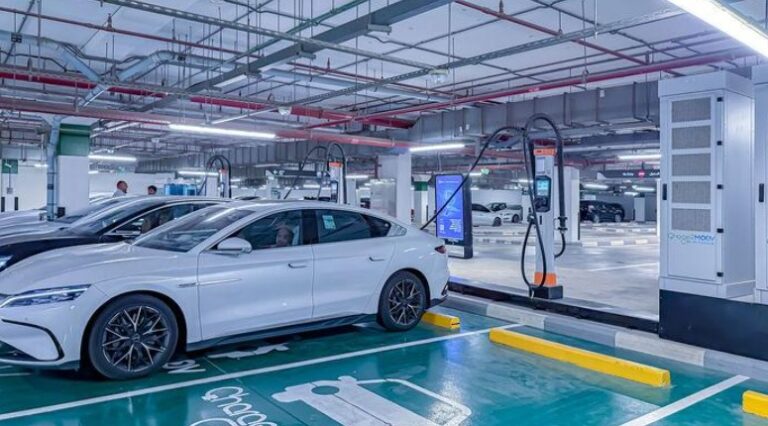
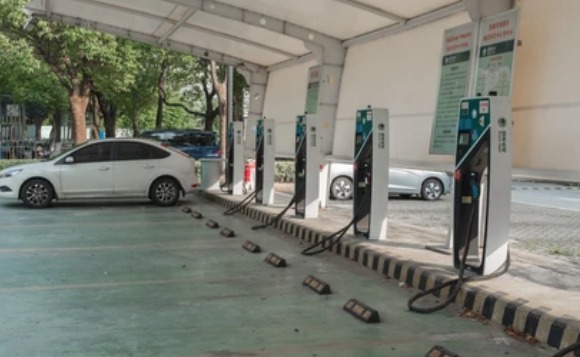
- Commercial AC Level 2 multi-unit setups start higher; DC fast chargers typically range from AED 35,000–50,000+ per unit plus significant electrical infrastructure.
Running costs tip: Home charging with DEWA residential tariffs is roughly AED 0.29–0.44 per kWh. Public AC is about AED 0.74/kWh (incl. VAT) and DC fast charging around AED 1.26/kWh. Many owners recover the installation cost in 1–4 years through fuel savings alone, especially versus public fast charging or petrol.
All EV charger installations in Dubai must comply with DEWA regulations. Key points:
- Approved equipment only — Chargers must meet relevant standards (e.g., IEC 61851) and be suitable for UAE conditions (IP rating for dust/heat).
- Licensed contractor — Installation must be carried out by a DEWA-approved/enrolled contractor. DIY is not permitted.
- Load assessment — A proper electrical load calculation and single-line diagram are required.
- NOC / Approvals — DEWA approval is mandatory. Apartments also need a No Objection Certificate from building management or the owners’ association.
- Safety devices — Dedicated circuit, appropriate MCB, Type A or Type B RCD (for DC fault protection), proper earthing, and isolation.
- Smart features — Many modern chargers support OCPP for monitoring and load management.
- Inspection — DEWA may inspect the completed installation before activation.
Skipping approvals risks fines, insurance issues, or unsafe installations. Watts & Ergon handles the full documentation and approval process on your behalf.
- Free / low-commitment site survey — Load calculation, cable route assessment, and property evaluation.
- Charger recommendation & proposal — Matched to your EV, daily driving needs, and electrical capacity.
- DEWA application & approvals — We prepare and submit all required drawings and documents.
- Electrical works & installation — Professional mounting, cabling, protection devices, and testing.
- Inspection & commissioning — Final checks and activation.
- Handover & training — App setup, usage guidance, and after-sales support.
Standard villa installations are often completed in a day or two once approvals are in place. The full process (including DEWA) typically takes 1–3 weeks depending on complexity.
- Major cost savings — Home charging is significantly cheaper than public networks or petrol. Overnight charging is convenient and gentle on the battery.
- Convenience — Wake up to a full battery every day. No more searching for public chargers.
- Property value — EV-ready homes are increasingly attractive to buyers and tenants.
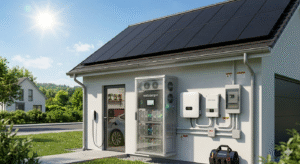
- Sustainability — Supports Dubai’s green mobility targets and reduces your carbon footprint. Pairing with a solar PV system (our speciality) lets you charge with clean energy.
- Battery health — Regular Level 2 AC charging is kinder to the battery than frequent DC fast charging.
- Future-proofing — Prepares your property for the growing EV market and potential multi-EV households.
- Incentives — EV owners in Dubai benefit from free Salik tags, registration discounts, green parking privileges, and other green mobility perks (check current RTA/DEWA updates).
We are a DEWA-approved contractor specializing in solar PV, electrical engineering, and EV charging solutions. Our team delivers:
- Full compliance and authority handling
- Seamless integration with existing or new solar systems
- Smart chargers with app control and load management
- Transparent pricing and quality workmanship
- After-sales support and maintenance
Whether you need a single home wallbox or a multi-point commercial setup, we provide engineered, reliable solutions tailored to Dubai properties.
Ready to install your EV charger?
Contact Watts & Ergon today for a free site assessment and personalised quote.
Drive electric with confidence—powered by the experts.