The way we generate solar energy is changing. Traditional rooftop panels that sit on top of a building are being joined — and in many cases replaced — by a smarter approach: Building-Integrated Photovoltaics (BIPV). Instead of adding solar as an afterthought, BIPV makes the building itself the power plant.
At Watts & Ergon, we see BIPV as one of the most important shifts in solar for commercial, residential, and industrial projects across the UAE and beyond.
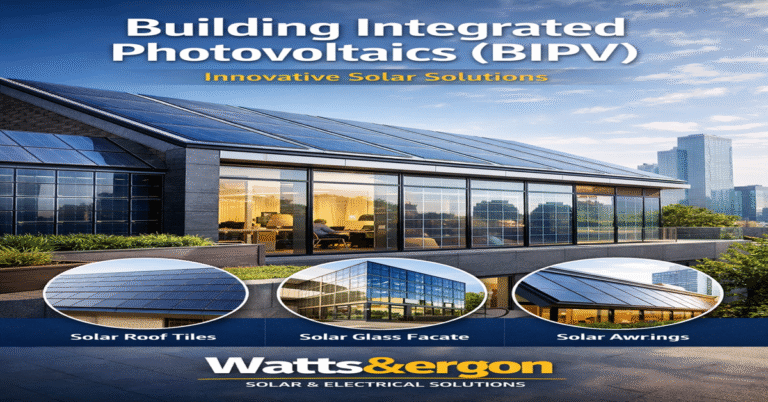
BIPV systems are photovoltaic modules that form an integral part of the building envelope. They replace conventional materials such as roof tiles, façade cladding, glass, or shading elements while generating electricity.
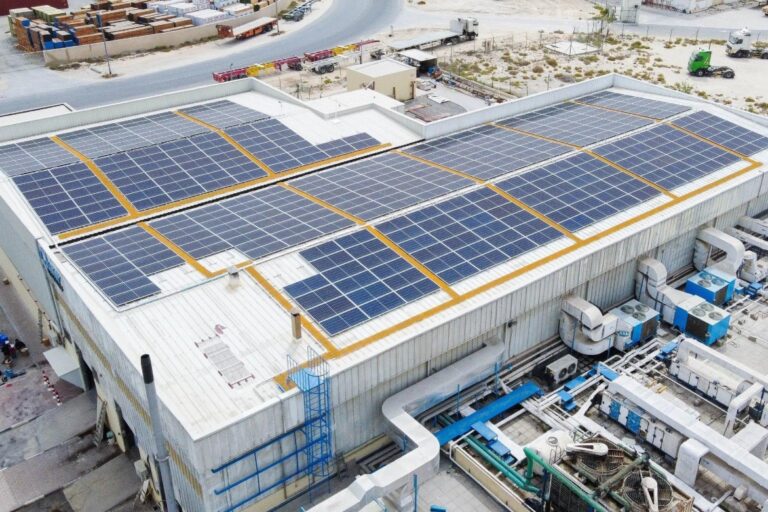
Unlike Building-Applied Photovoltaics (BAPV) — the familiar panels mounted on racks above an existing roof — BIPV serves two purposes at once:
- It acts as a functional building component (weather protection, insulation, daylight control, or structural skin).
- It produces clean electricity.
This dual role improves aesthetics, reduces material waste, and often improves the overall economics of a project because you are not paying for a separate cladding system plus a solar system.
BIPV can be used across almost every external surface of a building:
| Application |
Description |
Typical Benefits |
| Solar roofs & tiles |
Replaces conventional roofing materials |
Seamless look, full roof coverage |
| Façades & cladding |
Opaque or semi-transparent modules on walls |
Large generation area, architectural impact |
| Curtain walls & glazing |
Semi-transparent PV glass |
Daylight + power + solar heat control |
| Skylights & canopies |
Overhead or shading structures |
Natural light with energy production |
| Balconies, railings & sunshades |
Vertical or angled elements |
Extra generation + glare control |
Vertical façades typically produce less energy per square metre than an optimally tilted roof (often around 55–75% of roof yield depending on orientation), but they offer far more surface area on multi-storey buildings and generate power during morning and afternoon hours when demand can be high.
- Superior aesthetics
No visible racks or gaps. Modules can be colour-matched, textured, or made semi-transparent so they blend with or enhance the architectural design.
- Space efficiency
Ideal for dense urban environments where roof space is limited or already occupied.
- Cost offset
By replacing conventional building materials, the net cost of adding solar can be significantly lower than installing panels on top of a finished building.
- Improved building performance
Semi-transparent modules can reduce solar heat gain, lowering cooling loads — especially valuable in the UAE climate.
- Higher property value & compliance
Supports green building certifications and helps meet emerging net-zero and solar-ready building codes.
- Long-term energy independence
On-site generation reduces grid dependence and protects against rising electricity costs.
BIPV is moving from niche architectural projects into the mainstream. European installations roughly doubled between 2018 and 2024, and global market forecasts project strong double-digit growth through the early 2030s, driven by:
- Stricter energy performance of buildings regulations
- Net-zero construction targets
- Falling costs of high-efficiency crystalline silicon and emerging thin-film / tandem technologies
- Growing demand for aesthetically integrated solutions in commercial and high-end residential projects
Innovations such as coloured modules that retain most of their efficiency, lightweight formats, and better integration with Building Information Modelling (BIM) are further accelerating adoption.
Challenges Still to Overcome
BIPV is not yet a simple plug-and-play product in every market. Higher upfront costs compared with standard modules, the need for specialist design and installation teams, and fragmented standards have slowed wider uptake. However, as volumes grow and regulations favour integrated solutions, these barriers are steadily falling.
With intense solar radiation, high cooling demand, and ambitious clean energy targets, the UAE is an excellent environment for BIPV. Façade-integrated systems can generate meaningful power while reducing the heat load entering the building. New developments and major renovations offer the ideal moment to design solar generation into the envelope from the start.
As a DEWA-enrolled, ISO-certified solar and electrical contractor based in Dubai, Watts & Ergon delivers complete engineering-driven solutions:
- Feasibility studies and yield modelling for roofs, façades, and hybrid systems
- Design integration with architectural and structural teams
- Authority approvals and DEWA / Shams Dubai coordination
- Supply of Tier-1 BIPV-compatible modules and balance-of-system components
- Professional installation, testing, commissioning, and long-term monitoring
Whether you are planning a new commercial tower, a villa development, or a façade upgrade, we help turn building surfaces into reliable, attractive energy assets.
Conclusion
Building-Integrated Photovoltaics represents the next evolution of solar architecture. It removes the old compromise between “looking good” and “producing clean energy.” As technology improves, costs decline, and regulations tighten, BIPV will become a standard part of high-performance buildings.
The future of solar is not just on the roof — it is the building itself.