As the world shifts toward renewable energy, solar power has become a popular choice. Two of the most common types are On-Grid (grid-tied) and Off-Grid solar systems. Understanding their differences helps you make the right decision.
At Watts & Ergon, , we provide tailored solar solutions that maximize efficiency, savings, and reliability.
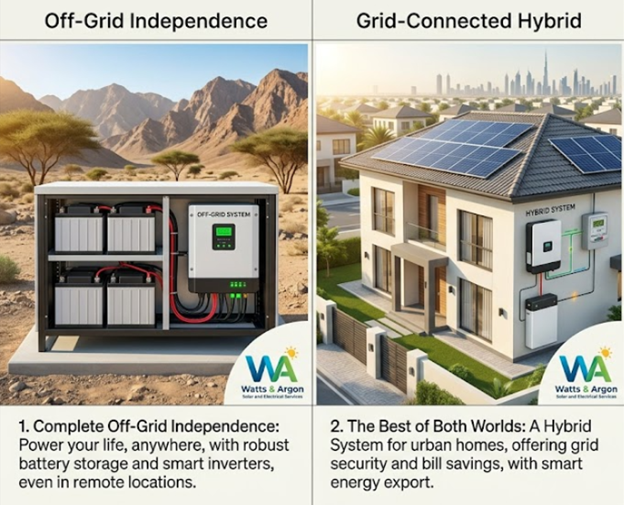
An on-grid system is connected to the local utility grid. Solar panels power your home during the day, excess energy can be sold back to the grid, and the grid supplies power when needed.
An off-grid system works independently without any grid connection. It uses batteries to store energy for use at night or during cloudy days, making it ideal for remote locations.
| Feature |
On-Grid System |
Off-Grid System |
| Grid Connection |
Connected to utility grid |
No grid connection |
| Battery Storage |
Usually not required |
Essential (large battery bank) |
| Initial Cost |
Lower |
Higher |
| Power During Outages |
No |
Yes |
| Excess Energy |
Exported to grid (net metering) |
Stored in batteries |
| Best For |
Urban areas with reliable grid |
Remote locations |
On-Grid Solar Systems
Pros: Affordable, reduces bills, easy maintenance.
Cons: No power during outages.
Off-Grid Solar Systems
Pros: Complete independence, works anywhere.
Cons: Expensive, higher maintenance, needs careful energy management.
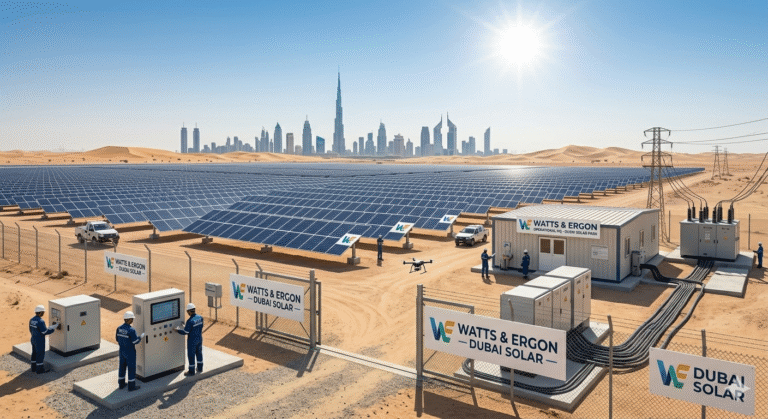
At Watts & Ergon, we design and install high-performance on-grid, off-grid, and hybrid solar systems using premium components. Our expert team ensures optimal performance and long-term savings.
Get Your Free Solar Consultation Today