DEWA Solar Regulations in Dubai:
At Watts & Ergon, we specialise in DEWA-enrolled solar solutions and handle the entire process end-to-end.

At Watts & Ergon, we integrate thermal imaging into our comprehensive electrical and solar maintenance services to help clients across Dubai, Abu Dhabi, and the wider UAE identify problems before they escalate.
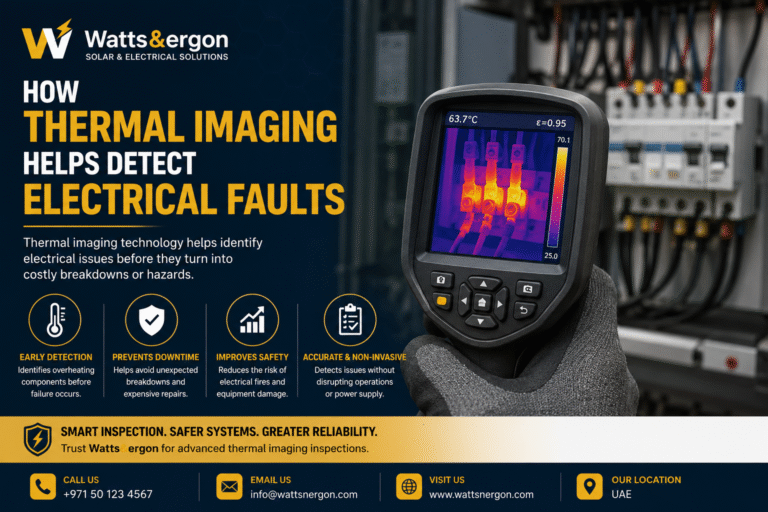
In the demanding electrical environment of the United Arab Emirates — characterized by extreme temperatures, high humidity near coastal areas, dust storms, and rapidly expanding infrastructure — undetected electrical faults can lead to catastrophic failures, fires, equipment damage, and costly downtime. Thermal imaging, also known as infrared thermography, has emerged as one of the most powerful non-invasive diagnostic tools available to electricians, facility managers, and solar energy professionals.
At Watts & Ergon, we integrate thermal imaging into our comprehensive electrical and solar maintenance services to help clients across Dubai, Abu Dhabi, and the wider UAE identify problems before they escalate. This extensive guide explains how thermal imaging works, its critical applications, real-world benefits, integration with solar PV systems, DEWA compliance, and why professional thermographic inspections are essential in 2026.
With soaring summer temperatures pushing electrical systems to their limits and massive solar adoption under Shams Dubai, early fault detection is more important than ever. Thermal cameras allow us to see heat signatures invisible to the naked eye, revealing issues that traditional methods might miss until it’s too late.
Thermal imaging uses specialized infrared cameras to detect and visualize temperature variations on the surface of objects. Every object emits infrared radiation based on its temperature. These cameras capture that radiation and convert it into a visual heatmap (thermogram) where hotter areas appear in bright colors (red, white, yellow) and cooler areas in darker tones (blue, black).
Unlike conventional inspection methods that require physical contact or system shutdowns, thermal imaging is completely non-contact and can be performed while systems are operating under normal load — making it ideal for live electrical installations.
Electrical faults generate excess heat due to increased resistance. Common causes include:
A well-trained thermographer can interpret these temperature anomalies to diagnose the severity and root cause of the problem.
According to industry standards (such as NFPA 70B and IEC guidelines), a temperature rise of 10°C above ambient or similar components often indicates a serious issue requiring immediate attention. Higher differentials signal critical faults that could lead to failure within days or hours.
Solar installations in the UAE face unique challenges including dust accumulation, high irradiance, and extreme heat. Thermal imaging is invaluable for:
At Watts & Ergon, thermal scans are part of our standard solar commissioning and annual maintenance protocols to maximize system performance and lifespan.
Identify problems weeks or months before failure, avoiding unplanned outages.
Inspect live systems from a safe distance without risk of arc flash or electrocution.
Preventive maintenance can reduce repair costs by up to 70% and extend equipment life.
Fixing faults lowers energy losses and reduces electricity bills.
Supports DEWA requirements for periodic inspection of electrical installations, especially in commercial and industrial facilities.
Performed during normal operation — no shutdown required.
| Aspect | Traditional Methods (Visual / Multimeter) | Thermal Imaging |
|---|---|---|
| Detection Speed | Slow, labor-intensive | Fast — entire panels scanned in minutes |
| Live System Inspection | Limited / High risk | Safe and effective |
| Early Detection | Poor (only visible damage) | Excellent (detects heat before failure) |
| Cost Effectiveness | Reactive — higher long-term costs | Preventive — significant savings |
| Safety | Higher risk | Very safe |
| Documentation | Manual reports | Professional thermograms with reports |
| Solar PV Suitability | Limited | Highly effective for modules & inverters |
DEWA strongly recommends thermographic inspections as part of preventive maintenance programs. Regular thermal imaging helps ensure compliance with the DEWA Regulations for Electrical Installations, reducing the risk of penalties or connection issues for new solar projects.
Our certified thermographers follow international best practices (ISO 18436, ASNT standards):
Dubai Villa Solar Installation (2025): Thermal scan revealed loose DC connections causing 15% efficiency loss. Early correction saved the homeowner thousands in lost generation and prevented potential fire hazard.
Commercial Office Tower in Downtown Dubai: Annual thermal survey identified overheating busbars in main distribution board. Proactive repair avoided a major outage during peak summer, saving an estimated AED 180,000 in downtime costs.
Industrial Facility in Jebel Ali: Thermal imaging detected failing bearings in motors and overloaded circuits, enabling scheduled maintenance and improving overall plant reliability by over 35%.
Recommended schedules:
While powerful, thermal imaging works best when combined with other diagnostic tools (ultrasound, power quality analysis). Environmental factors like wind, direct sunlight, or recent rain can affect readings — our experts account for these variables.
Advancements in AI-powered analysis, drone-mounted thermal cameras for large solar arrays, and integration with IoT sensors are making predictive maintenance more accurate and accessible. Watts & Ergon, stays at the forefront by investing in the latest technology to serve our UAE clients better.
Protect your electrical and solar assets with professional thermal imaging services from Watts&Ergon.
Schedule Your Inspection Today →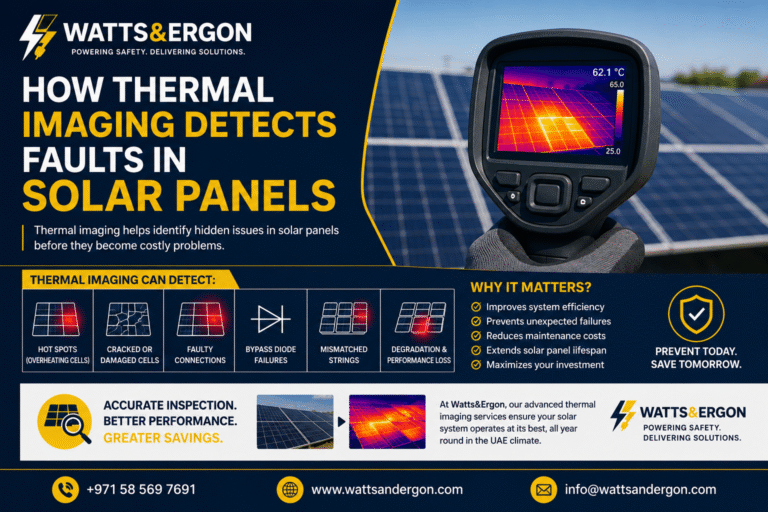
At Watts & Ergon, we specialise in DEWA-enrolled solar solutions and handle the entire process end-to-end.
Solar panels convert light, not heat, into electricity. When they get hotter, their efficiency drops. Understanding this effect — and how to minimize it — is essential for anyone installing or operating solar systems in Dubai and the wider UAE.
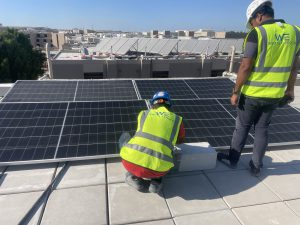
This guide breaks down the key DEWA solar regulations you need to know — system size limits, technical standards, approval process, equipment rules, and common compliance pitfalls — so you can install solar correctly the first time with a trusted DEWA-enrolled contractor like Watts&ergon.