Dubai’s skyline is defined by glass towers that reach for the sun. That same sun is now becoming an integral part of those buildings. Building-Integrated Photovoltaics (BIPV) is moving solar from an add-on on the roof to a core architectural element — facades, curtain walls, windows, cladding and roofing that generate clean electricity while performing as building materials.
In a city where buildings account for a large share of energy use and cooling loads dominate, BIPV is emerging as one of the most practical routes toward the Dubai Clean Energy Strategy 2050 and net-zero ambitions. At Watts & Ergon, a DEWA-approved and ISO-certified solar EPC contractor, we design and deliver BIPV systems that turn high-rises, commercial towers and landmark projects into energy-producing assets without compromising aesthetics.
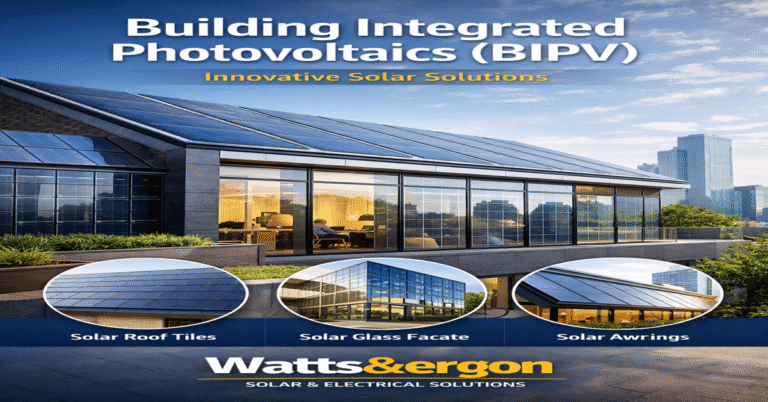
BIPV replaces conventional construction materials with photovoltaic components. The solar modules become the building envelope itself:
- Solar glass facades and curtain walls
- Semi-transparent or transparent PV windows
- Photovoltaic cladding and rainscreen systems
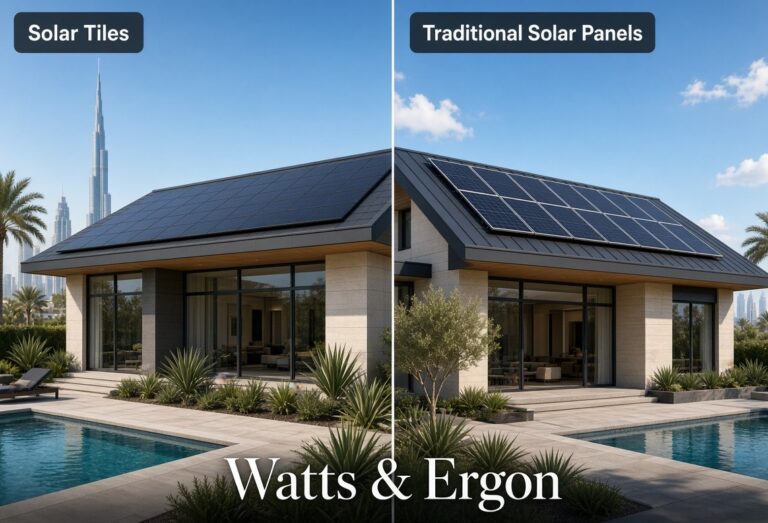
- Integrated solar roof tiles and roofing
- Solar shading devices, canopies and walkable surfaces
Unlike traditional Building-Applied PV (rooftop panels bolted on later), BIPV is designed from the start as both structure and power generator. This dual function is especially powerful in Dubai’s dense high-rise environment, where roof space is limited relative to the vast vertical surface area of towers.
Dubai offers near-ideal conditions: high solar irradiance (typically over 2,200 kWh/m²/year), long sunshine hours, and a regulatory framework that supports distributed solar through DEWA’s Shams Dubai net-metering programme. Systems installed on rooftops, facades or other building structures can export surplus power and receive credits at retail rates (subject to current capacity rules, generally up to 1 MW per plot for eligible installations).
Research focused on Dubai high-rises has shown that for buildings taller than roughly seven to nine floors, well-designed BIPV (especially hybrid window + façade systems) can outperform pure rooftop PV in overall energy impact. Window-replacement and exterior-wall BIPV configurations reduce cooling loads significantly while generating on-site power. Studies report heating and cooling energy reductions in the range of 13–33% depending on configuration, orientation and technology.
Additional advantages in the local climate include:
- Reduced solar heat gain through selective or semi-transparent modules
- Improved thermal performance of the envelope
- Lower peak cooling demand
- Strong alignment with Dubai Green Building regulations and Sa’fat requirements
Local manufacturing capacity for solar modules and customized BIPV façades is also expanding in the UAE, improving supply-chain resilience and options for desert conditions.
Aesthetics without compromise
Modern BIPV modules come in a range of colours, transparencies, textures and sizes. Buildings can retain the sleek glass-and-metal look Dubai is known for while generating power.
Cost efficiency over the project lifecycle
Because BIPV replaces materials that would have been installed anyway (glass, cladding, roofing), the incremental cost is often lower than adding a separate solar system later. Payback periods typically fall in the 6–13 year range depending on system type, building use and electricity tariffs, with strong performance in commercial applications.
Energy and carbon savings
On-site generation + lower cooling loads = reduced grid demand and lower carbon footprint. This supports LEED, BREEAM and net-zero pathways and can enhance asset value and tenant appeal.
Regulatory and market readiness
DEWA-approved systems qualify for net metering. BIPV installations on facades and integrated structures are explicitly supported under current Shams Dubai connection conditions (ground-mounted systems are generally not).
Iconic and high-profile projects have already demonstrated the concept — from gold-coloured photovoltaic glass on landmark structures to fully solar-powered luxury residences featuring extensive BIPV façades, and research-and-development centres incorporating coloured and semi-transparent PV glass. These examples show that BIPV can meet both architectural ambition and performance targets in the UAE climate.
We provide end-to-end BIPV solutions tailored to Dubai’s conditions and regulations:
- Architectural and energy assessment
- Custom system design (orientation, technology selection — crystalline, thin-film, semi-transparent, etc.)
- DEWA Shams Dubai compliance, documentation and approvals
- Supply of high-performance, climate-suited modules
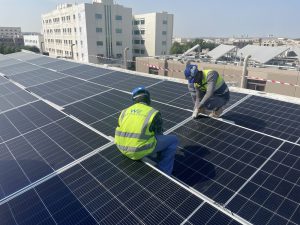
- Installation, testing and commissioning
- Ongoing performance monitoring and O&M
Our focus is commercial high-rises, offices, hotels, mixed-use developments and landmark buildings where façade area offers the greatest opportunity. We prioritise solutions that balance power density, thermal performance, visual quality and long-term reliability (25–30 year performance warranties are standard on quality modules).
As Dubai continues to densify and raise the bar on sustainability, the buildings of the future will not merely host solar — they will be solar. BIPV turns every square metre of façade and roof into a productive asset, reduces operational energy intensity, and helps owners meet both regulatory and market expectations.
Whether you are designing a new tower, planning a façade retrofit, or targeting net-zero certification, BIPV deserves a place in the conversation.
Ready to explore BIPV for your project?
Contact Watts & Ergon for a free consultation and site assessment. We will help you evaluate the right technology mix, estimated generation, cooling-load impact and ROI under current DEWA rules.
Power the future of your building — beautifully and efficiently — with Watts & Ergon.