Dubai’s intense sun is a solar goldmine — over 2,200 kWh/m² of annual irradiance — but the heat is brutal. Ambient temperatures regularly exceed 40–45°C, and rooftop panel surfaces can hit 65–75°C. At those temperatures, every solar panel loses power. The difference between a good panel and a great one can mean 5–8% more annual energy yield and thousands of dirhams in extra savings over 25 years.
At Watts & Ergon, a DEWA-approved and ISO-certified solar EPC contractor based in Dubai, we design systems specifically for the UAE’s extreme heat, dust, and UV. This guide explains exactly what to look for and which technologies perform best in high temperatures.
Why Heat Kills Solar Panel Output
Solar panels are rated at Standard Test Conditions (STC) of 25°C. For every degree above that, power output drops according to the panel’s temperature coefficient of power (Pmax).
Typical impact at 65°C cell temperature (common on Dubai rooftops in summer):
| Technology |
Typical Temp. Coefficient |
Approx. Output at 65°C |
| Standard Mono PERC |
–0.34% to –0.38%/°C |
~86% |
| N-type TOPCon |
–0.28% to –0.30%/°C |
~88% |
| IBC / Back-contact |
–0.26% to –0.30%/°C |
~88–89% |
| HJT (Heterojunction) |
–0.24% to –0.26%/°C |
~89–90% |
| Thin-film CdTe |
–0.19% to –0.22%/°C |
~91%+ |
A lower (closer to zero) temperature coefficient means significantly less power loss during peak summer hours when electricity is most valuable.
1. HJT (Heterojunction) – Best Pure Heat Performance
HJT panels sandwich crystalline silicon between thin layers of amorphous silicon. They deliver the lowest temperature coefficients among mainstream crystalline technologies and excellent low-light performance.
Strong options: REC Alpha Pure-R / Pure-RX, Canadian Solar HiHero, Huasun Himalaya series.
Temperature coefficient often –0.24% to –0.26%/°C. Ideal when maximum summer yield and long-term stability matter most.
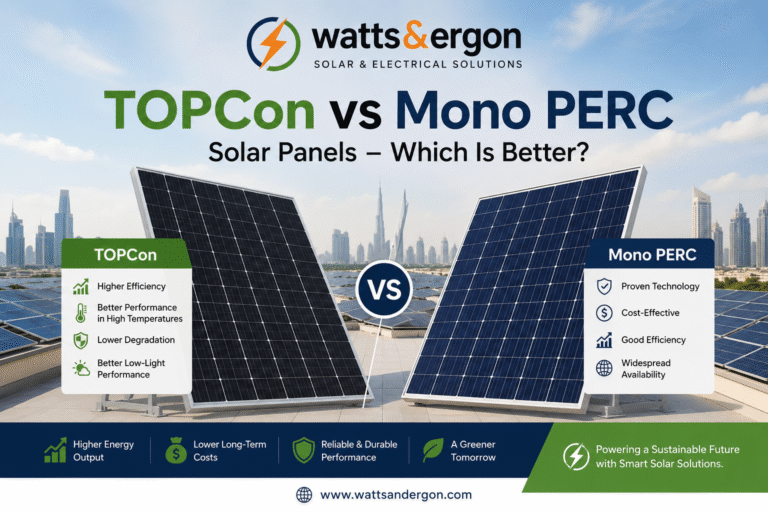
2. N-type TOPCon – Best Overall Value for Most Projects
TOPCon offers high efficiency (22.5–24%+), solid heat performance, good bifacial gains, and competitive pricing. It is the workhorse technology for many residential and commercial systems in the UAE in 2026.
Leading models: LONGi Hi-MO series (X6 / X10), Jinko Tiger Neo, JA Solar DeepBlue 4.0 / 4.0 Pro, Trina Vertex S+.
Temperature coefficients typically –0.28% to –0.30%/°C with strong anti-dust coatings and robust frames.
3. Back-contact / ABC / HPBC / IBC
These designs move contacts to the rear of the cell, improving efficiency and aesthetics. Some of the newest versions (AIKO Neostar, LONGi Hi-MO X10 HPBC, Maxeon) achieve temperature coefficients competitive with HJT while delivering very high power density — useful on space-constrained villa roofs.
4. Bifacial Panels
Especially valuable in Dubai. Light reflected from light-coloured roofs, sand, or white membranes boosts rear-side generation. Combined with good temperature performance, bifacial TOPCon or HJT modules often deliver the highest real-world energy yield.
5. Thin-film (CdTe)
Excellent temperature coefficient and heat tolerance, but lower efficiency means more space is required. More common on large ground-mount or industrial projects than residential rooftops.
What Else Matters in Dubai Besides Temperature Coefficient
- Anti-dust / hydrophobic coatings — reduce soiling losses from sand and dust.
- Reinforced frames and 3.2 mm tempered glass — resist abrasion and high wind loads.
- PID resistance and high UV stability — prevent long-term degradation under intense Middle East sun.
- Low annual degradation (ideally ≤0.35–0.40%/year) and strong warranties (25–30 years product + performance).
- NMOT / NOCT — lower nominal operating cell temperature indicates better heat dissipation.
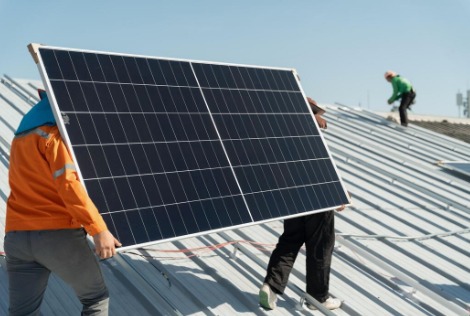
- Proper installation — elevated mounting with good rear airflow can drop cell temperature by several degrees and recover meaningful output.
Recommended Choices by Project Type (2026)
| Project Type |
Recommended Technology |
Why It Works in Dubai Heat |
| Villas & limited roof |
High-efficiency HJT or ABC/HPBC |
Max power density + best temp coefficient |
| Most residential & small commercial |
N-type TOPCon (bifacial preferred) |
Best balance of yield, cost & availability |
| Large commercial / industrial |
TOPCon or HJT bifacial |
High yield + strong warranties |
| Desert / high-dust sites |
TOPCon or HJT with anti-dust coating + robust frame |
Durability + cleanability |
How Watts & Ergon Helps You Choose and Install Correctly
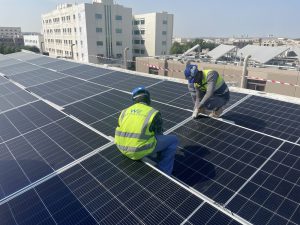
We only specify Tier-1 modules that perform well under UAE conditions and are accepted under DEWA’s Shams Dubai programme. Our process includes:
- Detailed site assessment (roof structure, shading, dust exposure, orientation)
- Technology selection matched to your roof space and budget
- Optimised mounting for maximum airflow and yield
- Full DEWA approvals, installation, commissioning and monitoring
- Ongoing O&M options including cleaning schedules suited to Dubai’s dust seasons
Important: Choosing the wrong panel for Dubai heat can cost you several percent of annual production every year for 25+ years. Choosing the right technology and installing it correctly maximises your savings under net metering and shortens payback.
Ready to Find the Best High-Temperature Solar Solution?
Contact Watts & Ergon today for a free technical assessment and customised proposal.
Get Your Free Assessment
Power your future with solar engineered for the UAE climate.