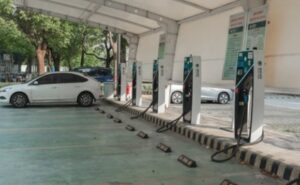
EV Charger Installation in Dubai: (2026 Guide)
At Watts & Ergon, a DEWA-approved solar and electrical contractor, we provide complete EV charger installation services for villas, apartments, offices, hotels, and commercial properties across Dubai.

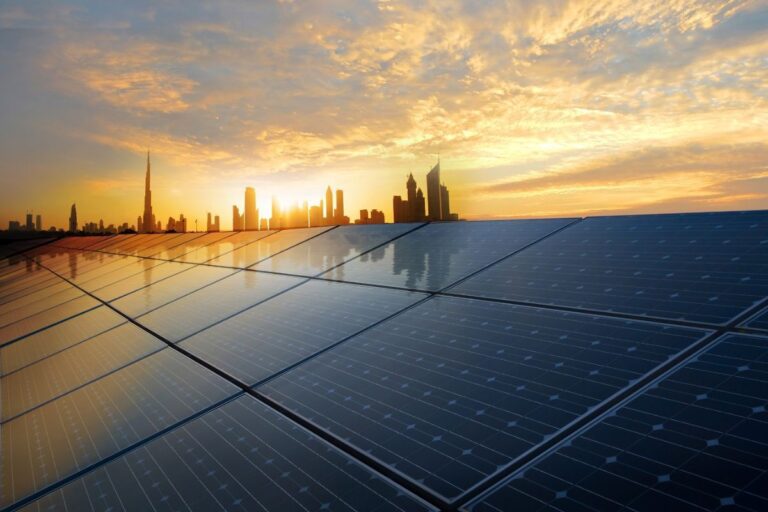
The UAE’s industrial sector is one of the largest electricity consumers in the region. Factories, warehouses, manufacturing plants, and logistics hubs face high daytime energy bills driven by production loads, cooling, and continuous operations. With abundant sunshine (typically 5.5–6 peak sun hours daily), falling solar costs, and supportive policies, industrial solar energy systems have become one of the strongest investments available in 2026.
At Watts & Ergon, a DEWA- and ADDC-approved solar EPC contractor based in Dubai, we design, install, and maintain high-performance industrial solar PV systems across the UAE. This complete guide covers everything industrial facility owners need to know.
Several factors have aligned to make 2026 an ideal time for factories and industrial sites to go solar:
Solar generation also aligns naturally with typical factory operating hours, maximizing self-consumption and reducing peak demand charges.
Industrial solar installations in the UAE generally fall into these categories:
The most common solution for factories and warehouses with large flat roofs. Typical sizes range from 100 kW to 2 MW (or up to the utility limit). In Dubai, ground-mounted systems are generally restricted under Shams Dubai (rooftop, façade, and structure-integrated only), so rooftops dominate.
Feasible in some emirates (notably parts of Abu Dhabi and northern emirates, subject to approval). Suitable for facilities with available land. Larger industrial parks may use multi-megawatt ground arrays.
Ideal for facilities with large parking areas. These provide shade for vehicles while generating power and can integrate EV charging. They often deliver higher yields due to better tilt and bifacial panel options.
Increasingly popular for peak shaving, higher self-consumption, backup for critical loads, and better alignment with variable production schedules. Battery systems help manage demand charges and improve resilience.
Systems can be grid-tied (most common under net metering/self-supply schemes) or designed for higher self-consumption with storage.
UAE solar rules vary by emirate and utility:
Always work with an approved contractor who handles the full approval process, technical drawings, and utility liaison. Watts & Ergon manages end-to-end compliance for DEWA, ADDC, and other utilities.
Costs have declined significantly. Approximate turnkey ranges for industrial systems (AED, subject to site specifics, equipment quality, and design):
| System Size | Typical Application | Approximate Cost Range (AED) | Cost per kW (AED) | Expected Annual Yield (kWh) |
|---|---|---|---|---|
| 50–100 kW | Small workshop / light manufacturing | 150,000 – 350,000 | 2,800 – 4,400 | 80,000 – 170,000 |
| 100–250 kW | Medium factory / warehouse | 280,000 – 750,000 | 2,800 – 3,800 | 160,000 – 425,000 |
| 500 kW – 1 MW | Large industrial plant | 1.2M – 3.2M | 2,500 – 3,500 | 800,000 – 1.7M |
| 2 MW+ | Heavy manufacturing / parks | 4.5M+ | 2,300 – 3,200 | 3M+ |
Payback examples (depending on tariff, self-consumption rate, and system quality):
Higher self-consumption, good roof orientation, Tier-1 components, and optimal design improve these figures. Battery storage adds capital cost but can enhance savings through peak shaving and higher utilization of solar generation.
A full turnkey partner minimizes risk and ensures the system performs as modeled for 25+ years.
Watts & Ergon is a Dubai-based, DEWA-enrolled, ISO-certified (9001, 14001, 45001) solar and electrical EPC contractor specializing in commercial and industrial projects. We deliver:
Our industrial clients typically see substantial bill reductions and strong returns while meeting sustainability goals.
Industrial solar energy systems in the UAE offer a clear path to lower operating costs, greater energy independence, and measurable progress toward net-zero targets. With the right design, quality components, and an experienced local partner, the economics are compelling.
Contact Watts & Ergon today for a free site assessment and customized proposal. We will analyze your load profile, roof or land availability, applicable regulations, and projected savings so you can make a confident, data-driven decision.
Website: wattsergon.com
Email: info@wattsergon.com
Power your industrial operations with clean, cost-effective solar energy — engineered for the UAE.
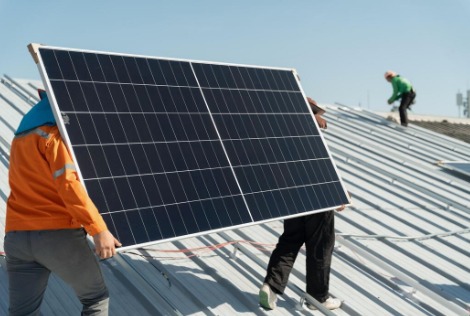
At Watts & Ergon, a DEWA-approved solar and electrical contractor, we provide complete EV charger installation services for villas, apartments, offices, hotels, and commercial properties across Dubai.
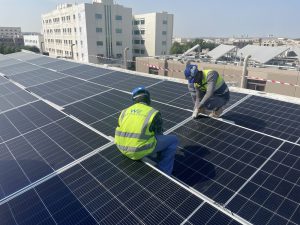
At Watts & Ergon, a DEWA-approved and ISO-certified solar EPC contractor, we specialize in designing and installing high-performance rooftop solar systems tailored specifically for warehouses, distribution centers, and industrial facilities across Dubai and the UAE.
At Watts & Ergon, a DEWA-enrolled, ISO-certified solar EPC contractor, we design and install systems specifically engineered for UAE conditions. Here’s what actually works in 2026.