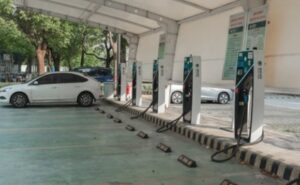
EV Charger Installation in Dubai: (2026 Guide)
At Watts & Ergon, a DEWA-approved solar and electrical contractor, we provide complete EV charger installation services for villas, apartments, offices, hotels, and commercial properties across Dubai.

In 2026, achieving net zero energy goals has shifted from a sustainability checkbox to a core business imperative. With rising energy costs, stricter regulations like DEWA’s Shams Dubai requirements, global pressure from investors, and customer demand for green practices, companies that fail to decarbonize risk losing competitive edge.
Net zero energy means balancing the amount of greenhouse gas emissions produced with an equivalent amount removed or offset, resulting in no net addition to the atmosphere. For companies, this primarily involves slashing Scope 1, 2, and 3 emissions through energy efficiency, renewable energy adoption, and smart technologies.
Net zero is not just about buying carbon credits — it demands genuine emission reductions. Scope 1 covers direct emissions (company vehicles, on-site fuel), Scope 2 indirect emissions from purchased electricity, and Scope 3 the massive value-chain emissions.
Key business benefits include:
At Watts & Ergon, we help businesses measure their baseline and design custom net zero roadmaps using our range of solar PV panels, lithium batteries for 24/7 clean power, and advanced solar inverters. Our professional installation team ensures every project meets DEWA standards and delivers maximum ROI.
Achieving net zero requires a structured, phased approach. Here is the proven 7-step framework used by leading organizations:
Our Watts & Ergon, installation team supports every step, from energy audits to full solar PV system deployment.
| Technology/Solution | Emission Reduction Potential | Payback Period | Best For | Watts & Ergon Offering |
|---|---|---|---|---|
| Solar PV Panels | 40-70% Scope 2 | 3-5 years | Industrial & Commercial rooftops | High-efficiency DEWA-approved panels + installation |
| Lithium Batteries | Enables 80-95% self-consumption | 4-7 years | 24/7 operations & peak shaving | Industrial-grade storage with BMS |
| Solar Inverters | Optimizes system efficiency | Immediate | Large-scale solar integration | Industrial hybrid & string inverters |
| Energy Efficiency Upgrades | 15-30% | 1-3 years | All facilities | Audits + electric products (wires, tools, boxes) |
| Hybrid Solar + Storage | Up to 90% total | 5-8 years | High-energy users in Dubai/UAE | Complete turnkey systems |
This table highlights why combining solar PV panels with lithium batteries and quality inverters delivers the fastest path to net zero. All products are available in our online store with expert consultation.
On-site solar generation is the cornerstone of most successful net zero journeys. Modern solar PV panels achieve over 22% efficiency and perform excellently in UAE’s high-irradiance climate.
Advantages for companies:
Pairing solar with lithium batteries solves intermittency, enabling businesses to store excess daytime energy for evening and backup power. Our industrial lithium battery solutions feature advanced BMS for safety and longevity. Watts & Ergon ’s solar inverters ensure seamless integration and maximum yield.
Upfront costs, regulatory hurdles, and technical integration top the list of challenges. Our team provides financing guidance, DEWA approval handling, and phased implementation to minimize disruption. We supply all supporting electric products — high-quality wires, tools, and electric boxes — for safe, code-compliant installations.
From Dubai industrial facilities achieving 65% bill reduction with our solar PV + lithium battery hybrid systems to warehouses going net zero with rooftop arrays and smart inverters — discover how Watts & Ergon clients are leading the way.
As a DEWA-approved, ISO-certified contractor, we offer:
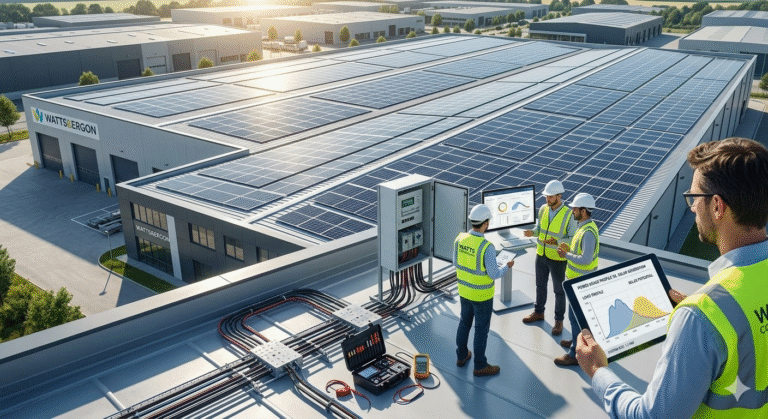
At Watts & Ergon, a DEWA-approved solar and electrical contractor, we provide complete EV charger installation services for villas, apartments, offices, hotels, and commercial properties across Dubai.
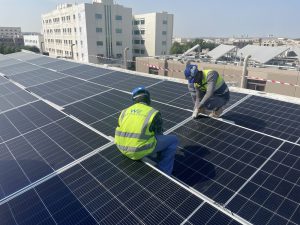
At Watts & Ergon, a DEWA-approved and ISO-certified solar EPC contractor, we specialize in designing and installing high-performance rooftop solar systems tailored specifically for warehouses, distribution centers, and industrial facilities across Dubai and the UAE.
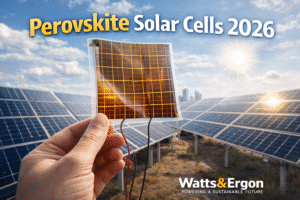
At Watts & Ergon, a DEWA-enrolled, ISO-certified solar EPC contractor, we design and install systems specifically engineered for UAE conditions. Here’s what actually works in 2026.