
LV Switchgear & Panel Manufacturing Dubai
Watts & Ergon designs, manufactures and factory-tests low voltage (LV) switchgear and electrical panels in Dubai — Main Distribution Boards (MDBs), Sub-Main Distribution Boards (SMDBs), Motor Control Centres (MCCs), ATS and capacitor bank panels up to 1,000 V — built to IEC 61439 and engineered for DEWA approval.
Every panel is designed in-house from your single line diagram, built with OEM breakers and components, and routine-tested before it leaves the workshop. Because the same DEWA-approved team also installs and commissions what it builds, you get one point of accountability from drawing to energization — no gaps between the panel builder, the contractor and the utility inspection.
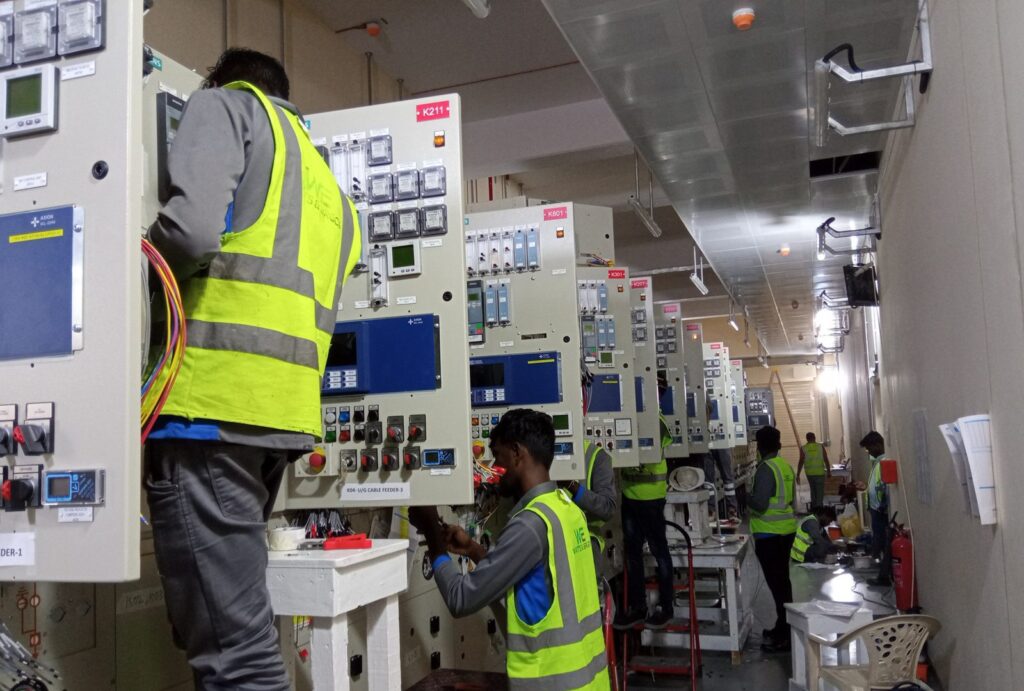
LV Switchgear & Panels We Manufacture
We manufacture low voltage switchgear and controlgear assemblies to IEC 61439-1/-2 for the UAE’s 400/230 V, 50 Hz supply — each one designed around your load schedule, fault level and site conditions:
- Main Distribution Boards (MDBs) — the main incoming supply and protection for a building or plant
- Sub-Main (SMDBs) and Final Distribution Boards — power distribution to floors, zones and tenants
- Motor Control Centres (MCCs), VFD and soft-starter panels for pumps, HVAC and production lines
- Automatic Transfer Switch (ATS) and generator synchronization panels for standby power
- Automatic power factor correction (APFC) capacitor bank panels
- Solar PV AC combiner and grid-interface panels
Panels are rated to the prospective short-circuit current at their point of installation and built with OEM air and moulded-case circuit breakers, contactors, relays and meters.
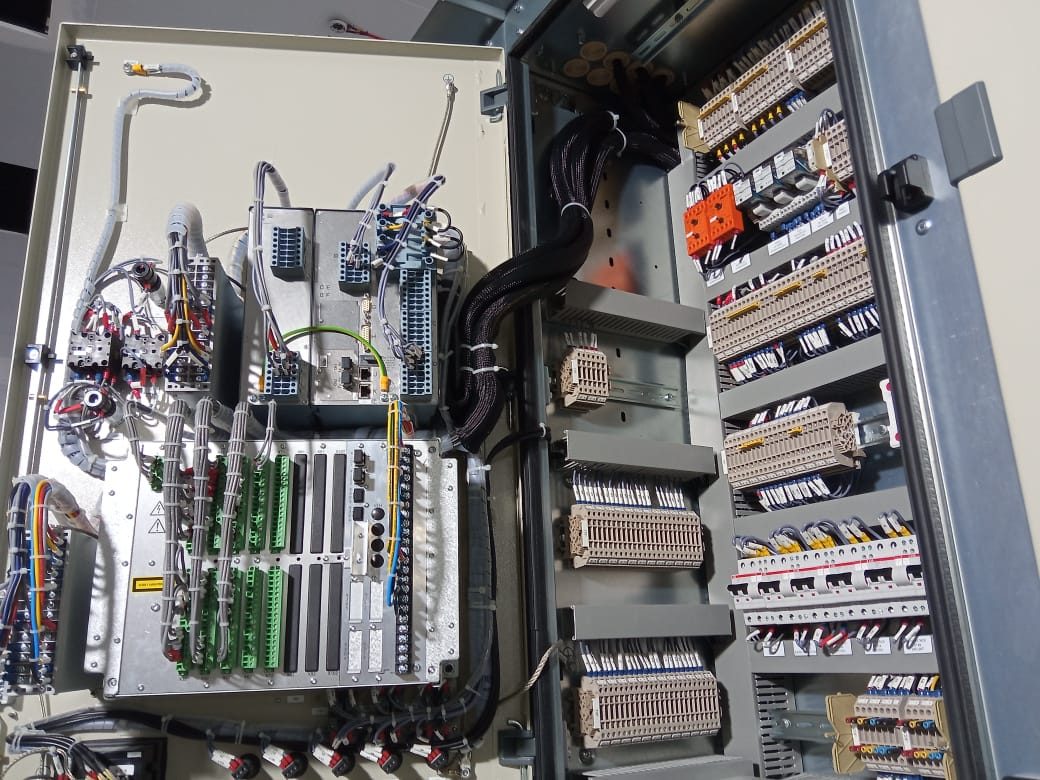
Design, Fabrication & Factory Testing
Every panel follows the same five-stage process, so quality does not depend on who is on shift:
- Engineering — load schedule, short-circuit and busbar sizing, discrimination study, general arrangement and wiring drawings from your SLD.
- Approval — drawings and datasheets submitted for consultant and DEWA approval before fabrication starts.
- Fabrication — enclosure build to the specified form of separation (Form 1 to Form 4b) and IP rating, copper busbar fabrication, and component mounting.
- Wiring & labelling — ferruled, colour-coded control wiring and engraved labels, matched to the as-built drawings.
- Routine verification & FAT — IEC 61439 routine tests including dielectric (power-frequency withstand), insulation resistance, protective-circuit continuity, wiring and functional checks, with a Factory Acceptance Test you can witness.
Each panel ships with its test reports, as-built drawings and O&M manual — the documents DEWA and your consultant will ask for at inspection.
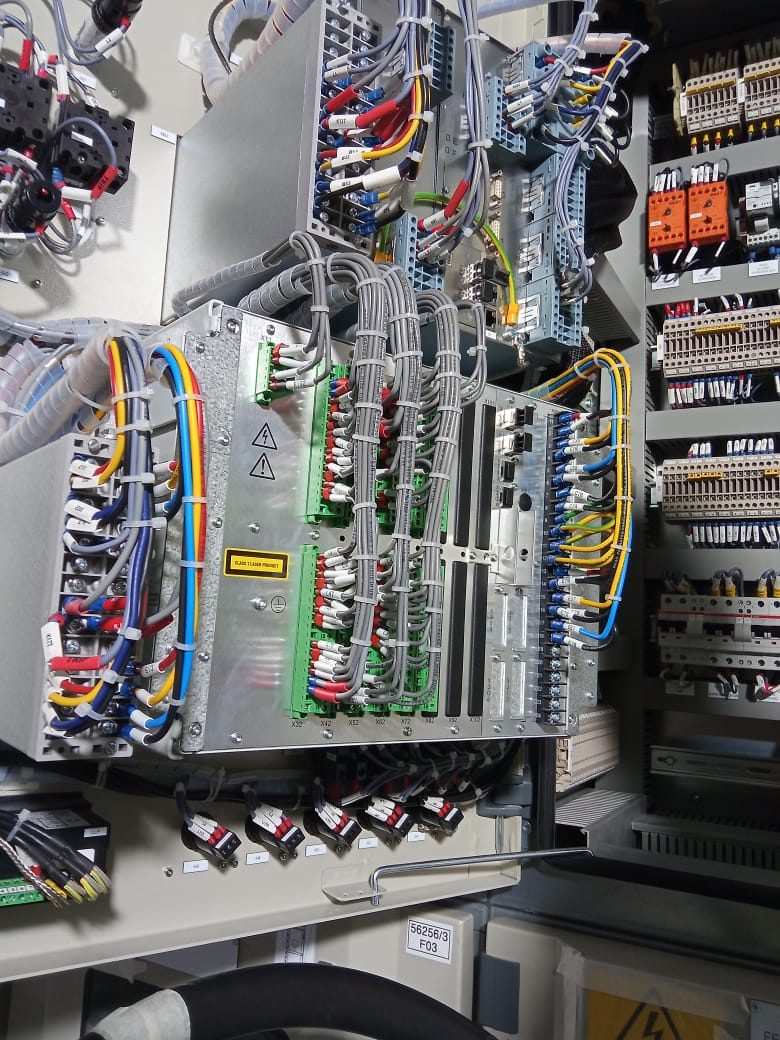
Built for UAE Conditions: Heat, Dust & DEWA Compliance
A panel that performs in a European test lab can still overheat in a Dubai plant room. We derate busbars and breakers for the 45–50 °C ambient temperatures common in UAE specifications, specify IP-rated enclosures and filtered ventilation against desert dust, and design for the clearances, phase colours and labelling DEWA inspectors check on site.
| Panel type | What it does | Typical application |
|---|---|---|
| MDB | Main incoming supply, protection and distribution | Commercial buildings, villas, warehouses, factories |
| SMDB / DB | Distributes power to floors, zones and final circuits | Offices, retail, residential units |
| MCC | Starts, controls and protects motors | HVAC plant, pump rooms, production lines |
| ATS / Synchronization | Transfers or parallels mains and generator supply | Hospitals, data rooms, critical loads |
| APFC capacitor bank | Corrects power factor and reduces losses | Factories, large commercial buildings |
| Solar AC combiner | Combines inverter outputs for grid connection | Rooftop and ground-mount solar PV |
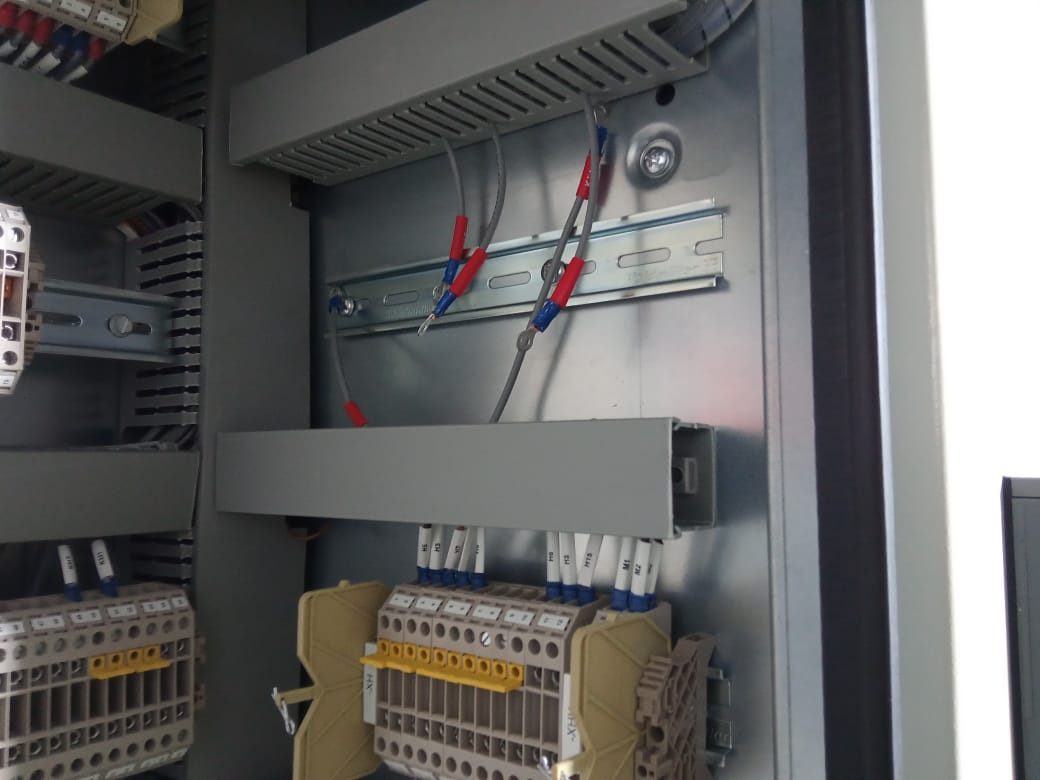
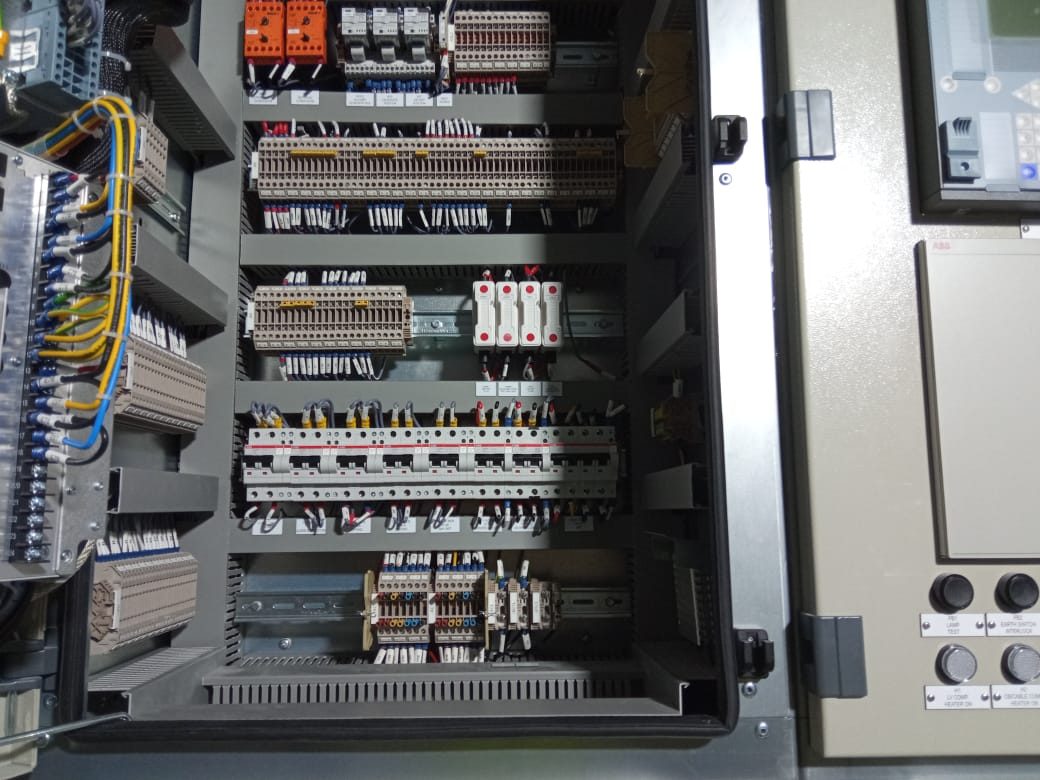
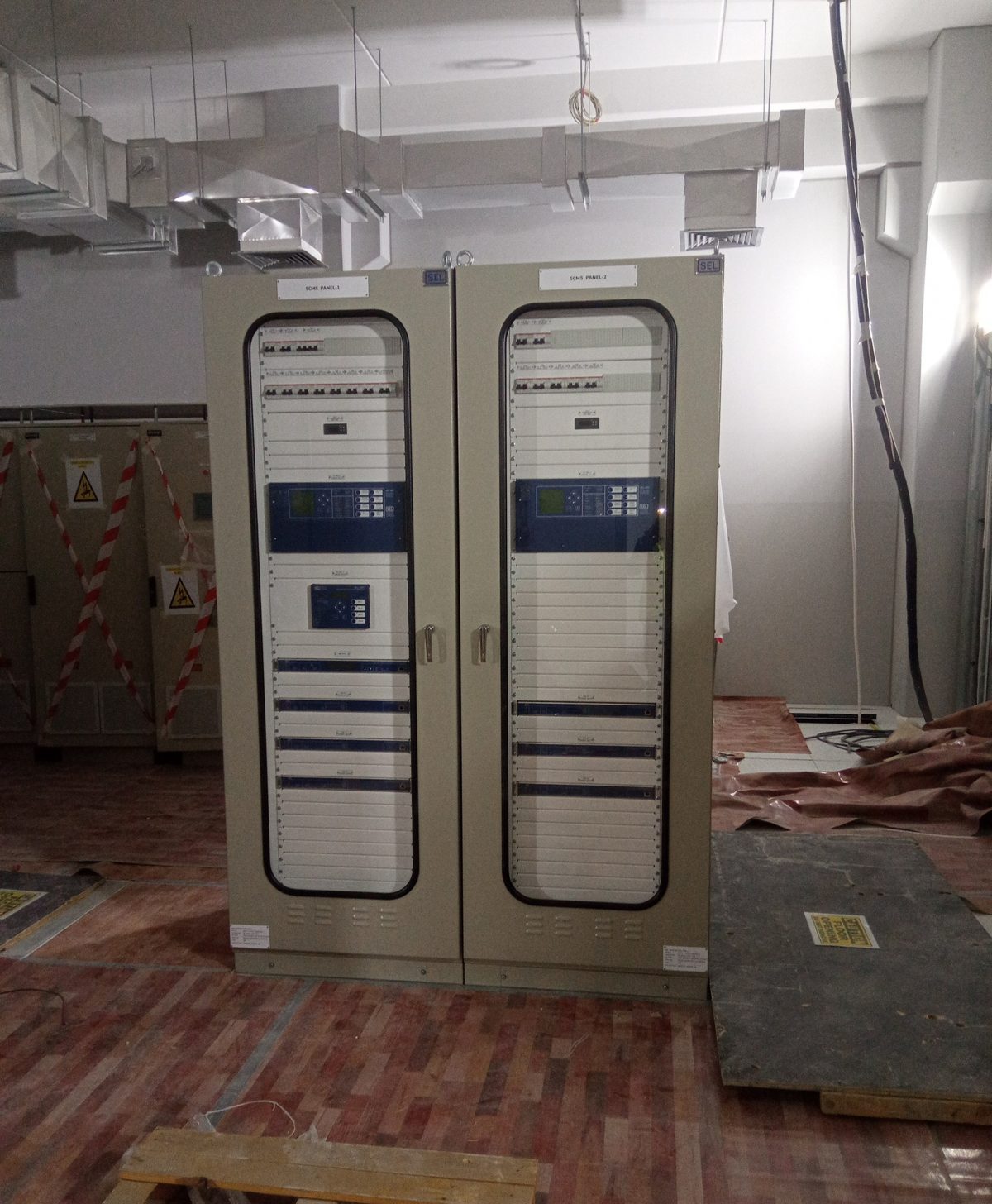
PLC, SCADA & HMI Automation Panels
We are extending our LV panel range into industrial automation. Soon you will be able to source control, monitoring and operator panels from the same team that builds your switchboards.
PLC Control Panels
Programmable logic controller panels for process control, pump stations and building services — designed, wired and tested in-house.
SCADA Systems
Supervisory control and data acquisition for real-time monitoring of power, energy and process equipment across one or many sites.
HMI Panels
Touch-screen operator interfaces that let your team monitor, control and troubleshoot equipment directly at the panel.
Planning an automation project? Talk to us now — we will keep you updated as these services launch.
FAQs
LV (low voltage) switchgear is the family of assemblies that distribute, control and protect electrical power at up to 1,000 V AC — in the UAE, the 400/230 V, 50 Hz supply used in buildings and plants. It includes Main Distribution Boards (MDBs), Sub-Main and Final Distribution Boards, Motor Control Centres (MCCs), ATS and generator panels, and capacitor bank (APFC) panels. All are governed by the IEC 61439 series of standards.
Our LV assemblies are designed and verified to IEC 61439-1 and IEC 61439-2 (power switchgear and controlgear assemblies), with distribution boards to IEC 61439-3 where applicable. Components such as breakers and contactors comply with IEC 60947, and enclosure protection is rated to IEC 60529 (IP code). Every panel is also engineered to the DEWA Regulations for Electrical Installations so it passes utility inspection in Dubai.
Yes. Watts & Ergon is a DEWA-approved contractor, and every panel is engineered to DEWA requirements — ratings, protection, metering arrangements, clearances, phase colour coding and labelling. We prepare the drawings and datasheets for consultant and DEWA submission and support the site inspection through to energization.
A form of separation (defined in IEC 61439-2) describes how a panel is internally divided to protect people and limit the spread of faults. Form 1 has no internal separation; Forms 2, 3 and 4 progressively separate busbars, functional units and terminals. Form 4b — where each outgoing circuit and its terminals are fully segregated — is common for MDBs in commercial and industrial buildings, because one circuit can be worked on while the rest stay live. The right form depends on your consultant’s specification and how critical continuity of supply is.
Lead time depends mostly on component availability and approval cycles rather than fabrication itself. Standard distribution boards are typically the quickest; large MDBs and MCCs take longer because breakers and approvals must be secured first. We confirm a project-specific programme — engineering, approval, fabrication, FAT and delivery — with your quotation.
Yes. Clients and consultants are welcome to witness the FAT before dispatch. It typically covers a visual and dimensional inspection against the approved drawings, dielectric and insulation resistance tests, protective-circuit continuity and a functional test of control wiring and interlocks. Signed test reports are handed over with the panel.