
ESE Lightning Protection Systems Dubai
Early Streamer Emission (ESE) air terminal systems for Dubai’s high-rise and large-footprint buildings — a single ESE terminal can protect a far larger area than a conventional Franklin rod, reducing the number of air terminals, down-conductors, and roof penetrations needed. Designed and installed to NFC 17-102, the standard ESE systems are certified against.
How ESE Air Terminals Work
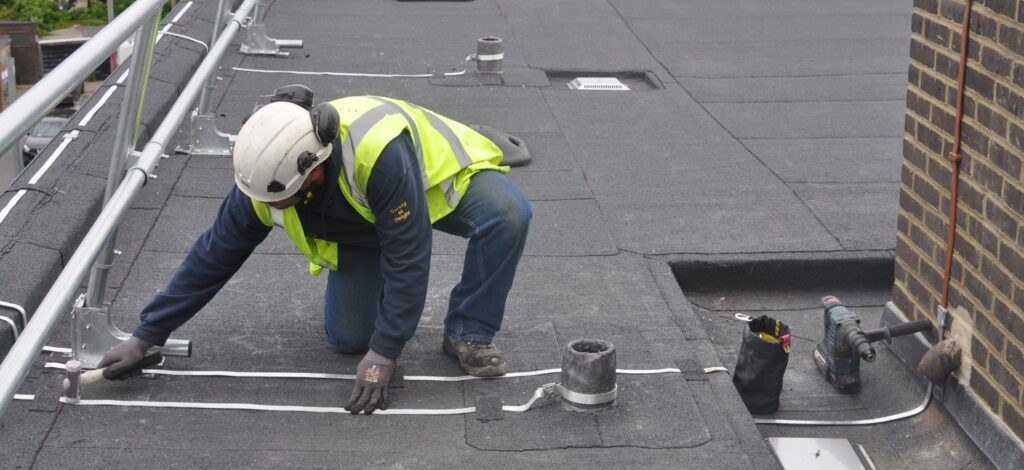
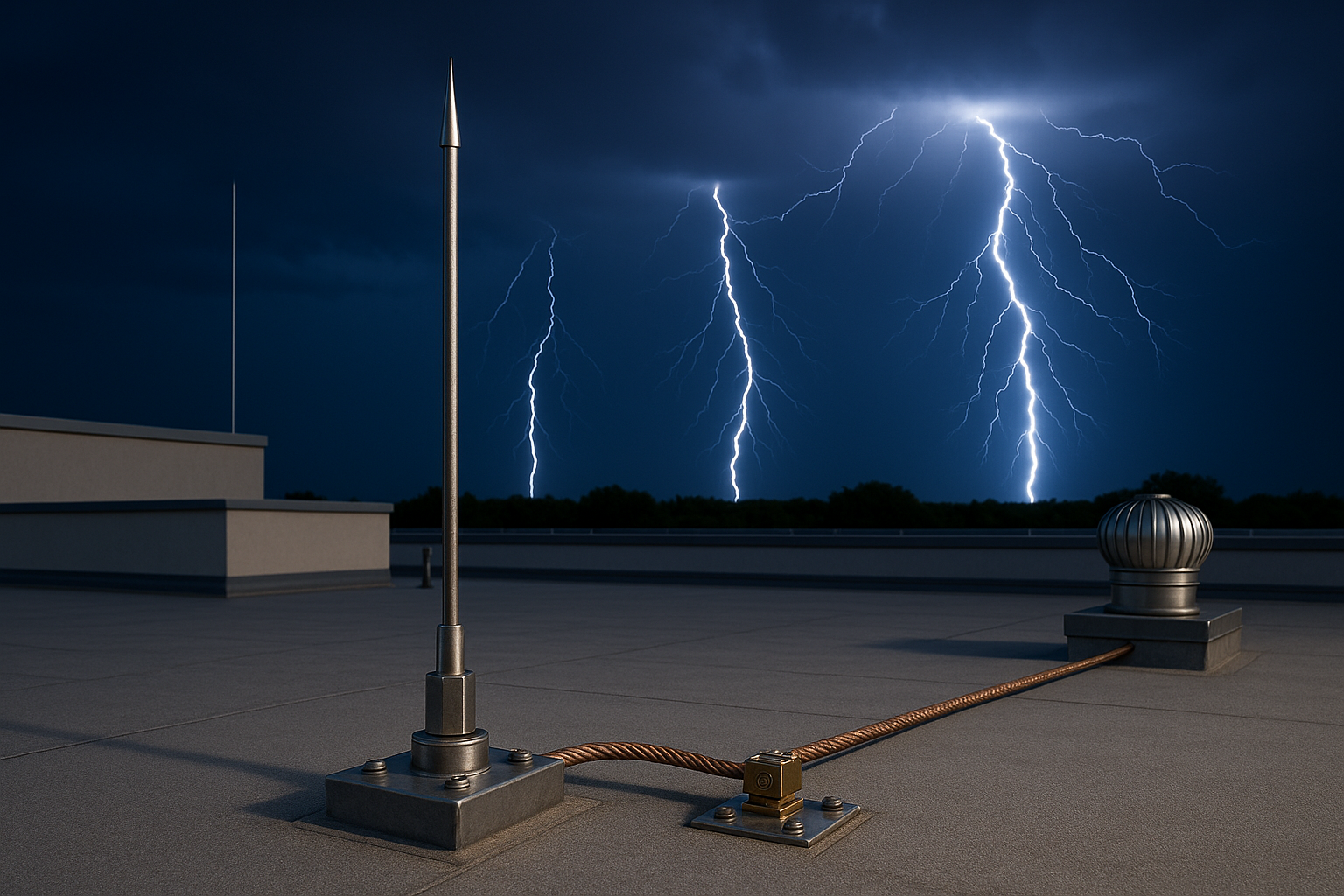
A conventional (Franklin rod) air terminal relies purely on its height and sharp tip to become the preferred strike point. An ESE terminal adds an active triggering device that emits an upward streamer earlier and more reliably than a passive rod, extending its effective protection radius well beyond what height alone would achieve. In practice, this means a single, correctly-positioned ESE terminal can cover a protection radius that would otherwise require several conventional rods — a real advantage on large flat roofs, warehouses, and mixed-height commercial buildings where multiple conventional terminals would mean multiple down-conductor runs and roof penetrations.
ESE vs. Conventional Franklin Rod Systems
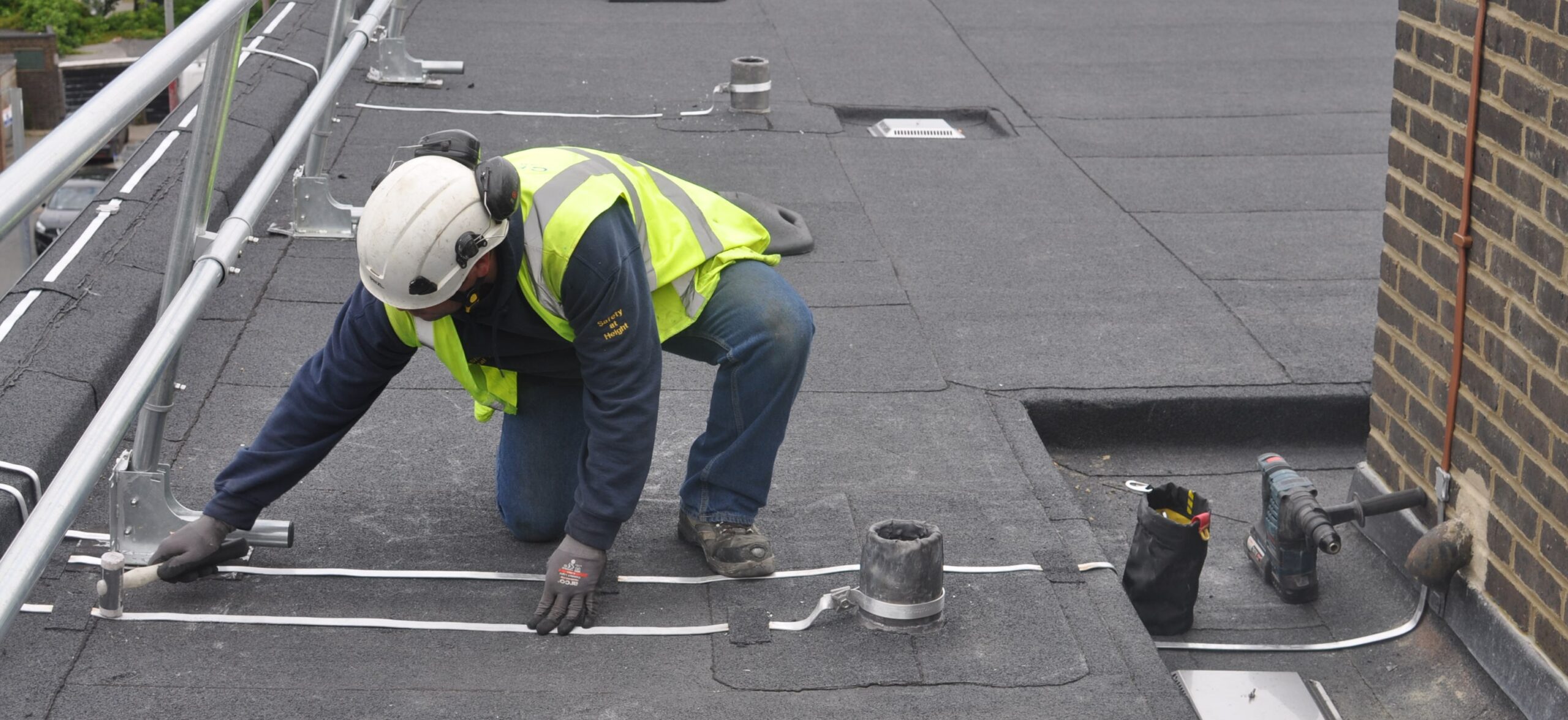
Neither system is universally “better” — the right choice depends on roof geometry, building height, and how many independent structures need coverage. ESE systems typically reduce the total number of air terminals and down-conductors needed on large or complex roofs, which can mean a cleaner installation with fewer penetrations. Conventional systems remain the simpler, lower-maintenance choice for smaller or simpler roof geometries where a Faraday-cage mesh design is already straightforward to implement. We assess both options against your building’s actual roof plan rather than defaulting to one system, and design to NFC 17-102 (the ESE-specific standard) or IEC 62305 (the conventional/general standard) as appropriate.
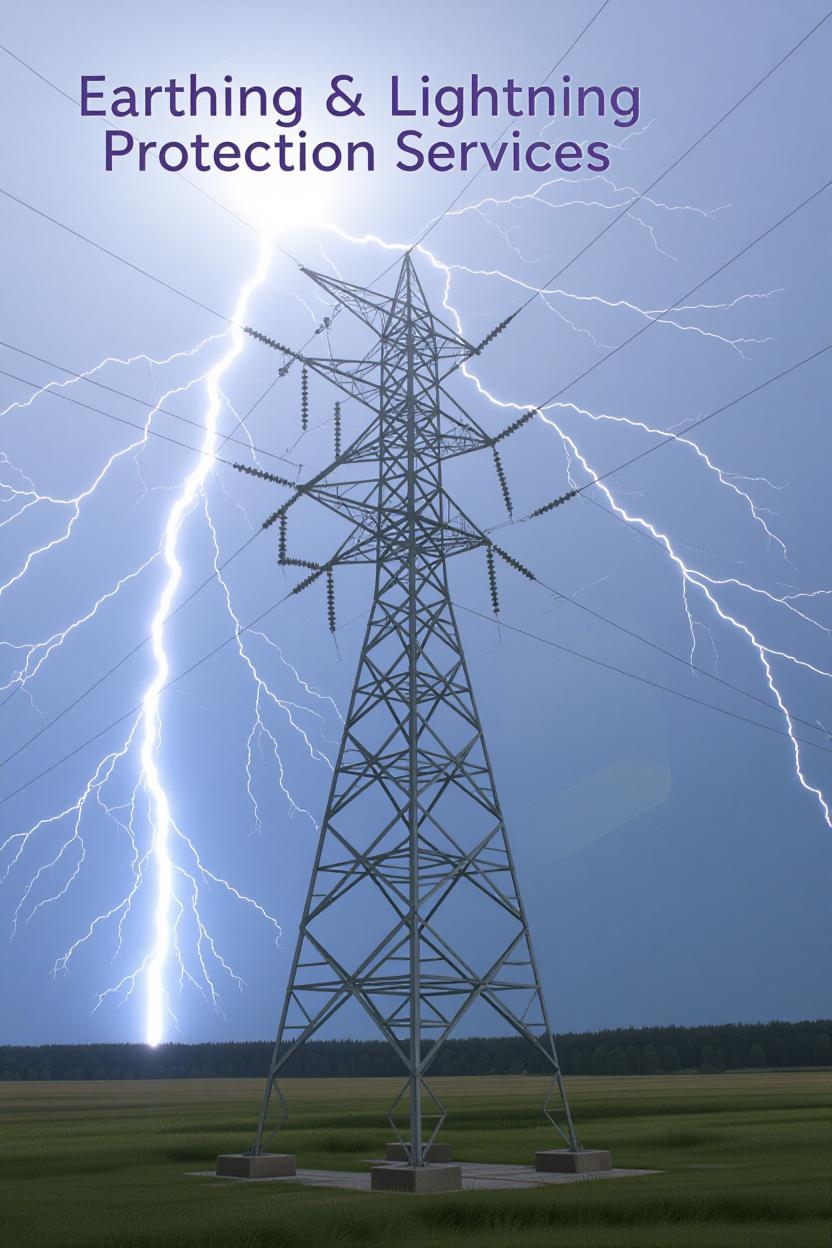
Grow with ESE Protection: Fewer Terminals, Full Coverage
FAQs
ESE is an air terminal technology that actively triggers an earlier upward streamer than a passive rod of the same height, extending its effective protection radius. It’s governed by the NFC 17-102 standard, which defines how the protection radius is calculated for a given terminal and building height.
Yes — ESE systems are a recognized, commonly-specified option for UAE commercial and industrial buildings, particularly larger structures where reducing the number of air terminals and down-conductor runs is a real practical advantage over a conventional multi-rod layout.
This depends on the building’s height, footprint, and roof complexity — calculated from the terminal’s rated protection radius under NFC 17-102 against your actual roof plan. Many mid-size commercial buildings need only one or two ESE terminals where a conventional system might need six or more rods.
Yes — the air terminal technology only changes how a strike is intercepted. The down-conductor and earthing network beneath it still need to be sized and installed to the same standard (low-impedance path, proper bonding) regardless of whether the terminal above is ESE or conventional.
Annual visual inspection and periodic earth resistance testing, the same schedule as conventional lightning protection systems — ESE terminals have no moving parts to service, but the down-conductors, bonding, and earth pits still need periodic verification.