As solar energy adoption accelerates across the globe, the technical focus often lands on efficiency ratings and battery storage capacities. However, for industrial-scale installations and residential setups alike, one of the most critical—yet frequently overlooked—aspects of a solar project is the Earthing (Grounding) and Lightning Protection System (LPS).
At Watts & Ergon, we understand that a solar array is a significant financial investment. Without a robust protection strategy, a single atmospheric discharge or a minor insulation fault can lead to catastrophic hardware failure, fire hazards, or even risk to human life. In this comprehensive guide, we will explore why earthing and lightning protection are non-negotiable for modern solar installations.
1. The Science of Risk: Why Solar Arrays are Targets
Solar panels are typically installed in exposed locations: expansive rooftops, open fields, or elevated carports. This positioning makes them inherently vulnerable to environmental electrical hazards.
Direct vs. Indirect Strikes
- Direct Lightning Strikes: These occur when lightning hits the PV modules or the mounting structure directly. The resulting surge involves millions of volts and thousands of amperes, capable of melting metal and vaporizing components instantly.
- Indirect Strikes (Surges): These are far more common. A strike nearby creates a powerful electromagnetic field that induces high-voltage surges in the DC and AC wiring of the solar system. Even if the lightning doesn’t “hit” the panels, the resulting surge can fry sensitive inverter electronics.
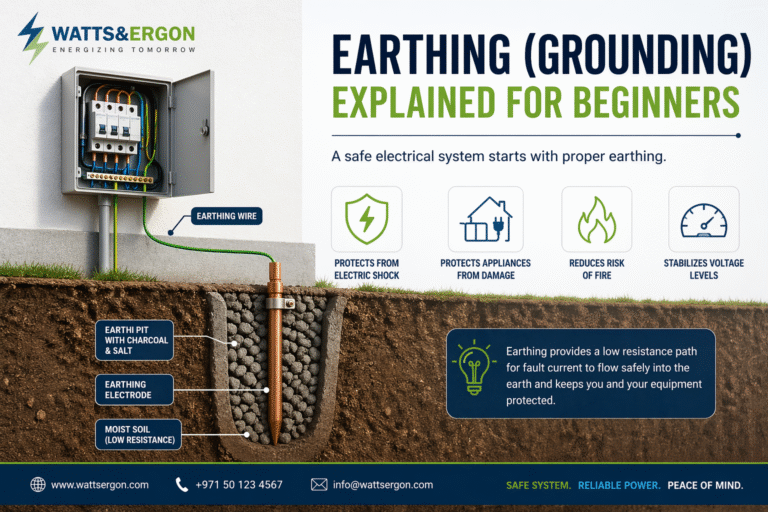
Earthing is the process of creating a low-resistance path to the earth’s surface. In a solar context, it serves two primary purposes:
- Equipment Grounding: Connecting the non-current-carrying metal parts (like panel frames and mounting rails) to the ground to prevent electric shock.
- System Grounding: Connecting one of the current-carrying conductors to the ground to stabilize voltage during normal operation and limit voltage spikes.
2. Components of a Professional Lightning Protection System (LPS)
A complete LPS for a solar plant consists of several layers of defense. Relying on just one component is a recipe for failure.
- Air Termination Systems: These are the rods or mesh conductors placed at the highest points to capture strikes and provide a dedicated path for the current.
- Down-Conductors: Once the terminal captures the strike, these conductors safely lead the energy down toward the earthing pit.
- Earth Termination System: Copper-clad steel rods, earth plates, or chemical electrodes buried deep in the soil to dissipate the massive electrical charge.
- Surge Protection Devices (SPDs): Critical components that handle the electrical surge within the wires on both the DC and AC sides.
| Sstandard |
sDescription |
Relevance to Solar
| IEC 62305 | s
Protection against lightning |
The global “gold standard” for designing LPS for structures and solar plants. |
| IEC 61643-32 | s
Low-voltage surge protective devices |
Specific requirements for SPDs used in photovoltaic installations. |
| BS 7671 |
Requirements for Electrical Installations |
Covers the earthing and bonding requirements for PV systems. |
| IEEE 80 |
Safety in AC Substation Grounding |
Vital for large-scale utility solar farms and high-voltage substations. |
4. Designing the Earthing Grid
A common mistake in solar installation is “daisy-chaining” panel frames with thin wires. For a system to be effective, the earthing grid must be integrated and low-impedance.
The Importance of Equipotential Bonding
Equipotential bonding means connecting all metal parts together so they stay at the same electrical potential. If a fault occurs, there is no “voltage difference” between two pieces of metal, which eliminates the risk of sparking (arcing) or shock.
Material Selection: The Watts & Ergon Standard
Using inferior materials leads to corrosion, rendering the system useless. We utilize high-conductivity copper conductors and high-quality galvanized steel (GI) for industrial grids, along with specialized earth enhancement compounds for dry soil conditions.
5. Surge Protection Strategy (Type 1, 2, and 3)
| SPD Type |
Location |
Purpose |
| Type 1 (Class I) |
Main Distribution Board |
Designed to handle high-energy surges from direct lightning strikes. |
| Type 2 (Class II) |
Inverter DC Input |
Protects against overvoltages caused by indirect strikes or switching transients. |
| Type 3 (Class III) |
Near Sensitive Equipment |
Fine-tuned protection for very sensitive electronics (PLCs, Data Loggers). |
- Using the Building’s Lightning Rod as a Solar Support: Never mount a solar panel directly to a lightning rod. This invites the strike into your electrical system.
- Inadequate Separation Distance: There must be a calculated separation distance to prevent side-flashing.
- High Earth Resistance: If resistance is above 5 Ohms, lightning energy will find an alternative, destructive path.
- Neglecting Maintenance: Earth pits dry out and cables corrode. Regular testing is essential.
7. The Financial Logic: ROI vs. Risk
A large-scale solar system is a significant asset. An LPS and earthing system typically represent less than 2-3% of the total project cost. However, the cost of neglect includes insurance rejection, massive downtime, and safety liability.
At Watts & Ergon, , we don’t just supply solar panels; we provide complete electrical ecosystems. Our catalog includes heavy-duty earthing rods, specialized solar DC SPDs, and professional wiring tools required to create a low-impedance earthing grid. Whether you are building a residential hub or a massive industrial solar farm, ensure your system is grounded in safety.