Frequent circuit breaker tripping is one of the most common electrical complaints in factories, warehouses, and commercial buildings. While it may seem like a minor inconvenience, repeated tripping often signals underlying issues that can lead to equipment damage, production downtime, and even fire hazards if left unaddressed.
At Watts & Ergon, , we regularly help clients across Dubai and the UAE diagnose and resolve persistent breaker tripping problems through proper load analysis and system upgrades.
1. Overloading
The most common cause. When the current flowing through a circuit exceeds the breaker’s rated capacity for a sustained period, the thermal element inside the breaker heats up and trips.
2. Short Circuits
A short circuit occurs when a hot wire touches a neutral or ground wire, causing a sudden surge of current. This triggers the magnetic trip mechanism almost instantly.
3. Ground Faults
Similar to short circuits but involving current leaking to ground. Common in wet or humid environments like Dubai’s summer conditions.
4. Inrush Current from Motors & Heavy Equipment
Industrial motors, compressors, pumps, and chillers draw 5–8 times their normal current during startup. If the breaker is not properly sized or lacks time-delay characteristics, it will trip frequently.
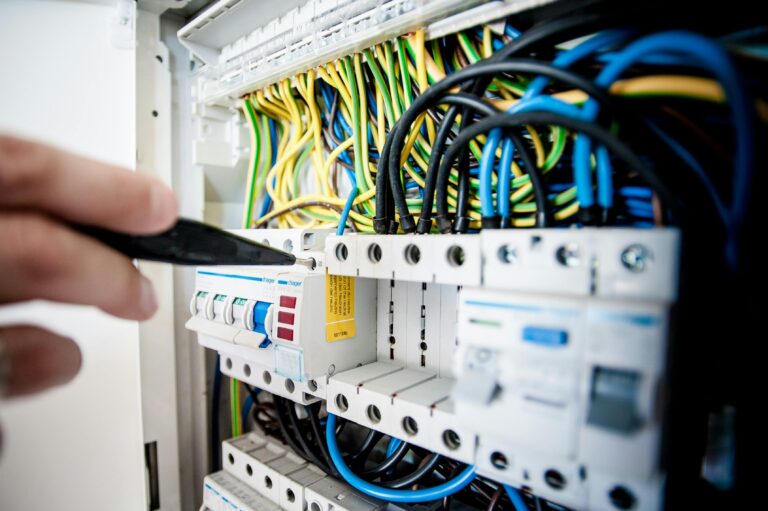
5. Loose Connections & Poor Terminations
Loose wires generate heat through increased resistance, causing the breaker to trip thermally even when the actual load is within limits.
6. Harmonic Distortion from VFDs & Non-Linear Loads
Modern industrial setups with Variable Frequency Drives (VFDs), UPS systems, and LED lighting create harmonics that can cause nuisance tripping.
7. Faulty or Aging Circuit Breakers
Breakers that have been tripped many times or are more than 10–15 years old often become overly sensitive and trip without real overload.
Common Causes of Frequent Breaker Tripping – Summary Table
| Cause |
Symptoms |
Common in |
Solution |
| Overloading |
Trips after running multiple machines |
Factories, workshops |
Load calculation & redistribution |
| Short Circuit |
Instant trip with spark/smell |
Damaged cables |
Inspect & replace faulty wiring |
| High Inrush Current |
Trips only during motor startup |
Industrial motors & compressors |
Use Type C or D breakers / Soft starters |
| Loose Connections |
Trips randomly with burning smell |
Old panels |
Tighten terminals & infrared scanning |
| Harmonics |
Nuisance tripping with VFDs |
Modern facilities |
Install harmonic filters or upgraded breakers |
| Faulty Breaker |
Trips with very low load |
Aging installations |
Replace breaker & test |
| Ground Fault |
Trips in humid/wet conditions |
Outdoor or wet areas |
Install RCCB / GFCI protection |
Diagnostic Steps You Should Take
- Record when and under what load the breaker trips.
- Check the actual load against the breaker rating using a clamp meter.
- Inspect all connections for looseness or overheating.
- Perform thermal imaging (infrared scanning) of the panel.
- Review motor starting methods and consider soft starters or VFDs with proper ramp-up settings.
- Conduct a professional load study and power quality analysis.
Important: Repeatedly resetting a tripping breaker without finding the root cause can lead to equipment failure, fire hazards, or voided insurance coverage.
At Watts & Ergon , we provide complete electrical system health checks, precise load calculations, thermographic inspections, and professional panel upgrades across Dubai and the UAE. Our team identifies the real reason behind frequent tripping and delivers long-term, code-compliant solutions.
Experiencing Frequent Circuit Breaker Tripping?
Don’t risk downtime or safety issues. Let the experts at Watts & Ergon diagnose and fix your electrical problems professionally.
We specialize in industrial and commercial electrical systems — from load calculations to full panel upgrades and power quality improvement.