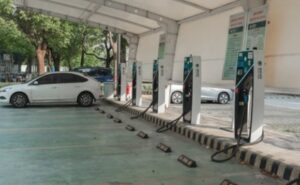
EV Charger Installation in Dubai: (2026 Guide)
At Watts & Ergon, a DEWA-approved solar and electrical contractor, we provide complete EV charger installation services for villas, apartments, offices, hotels, and commercial properties across Dubai.

At Watts & Ergon, we have helped countless clients across residential, commercial, and industrial sectors in the UAE and beyond identify hidden electrical risks before they escalate.
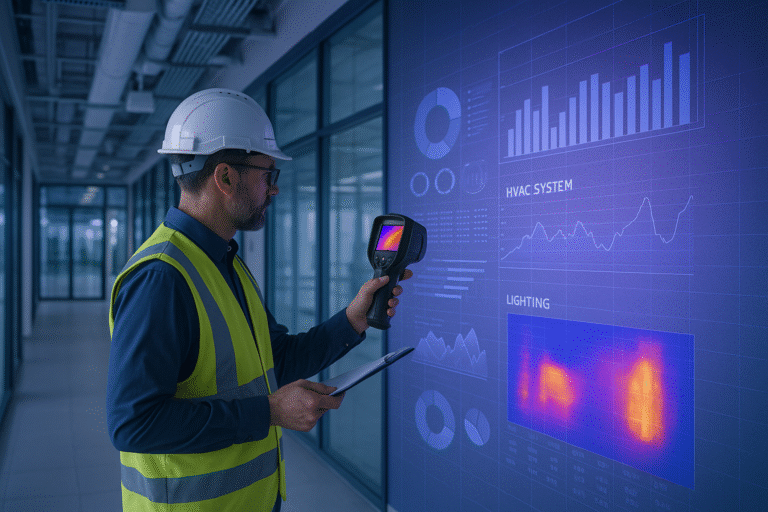
Electrical systems are the lifeblood of modern homes, offices, factories, and commercial buildings. Yet, most electrical problems develop silently — hidden behind walls, inside panels, or within connections — until they cause unexpected failures, costly downtime, or dangerous fires. Regular visual inspections often miss these issues, which is why professional thermal electrical inspection using infrared thermography has become an essential tool for proactive maintenance.
At Watts & Ergon, we have helped countless clients across residential, commercial, and industrial sectors in the UAE and beyond identify hidden electrical risks before they escalate.
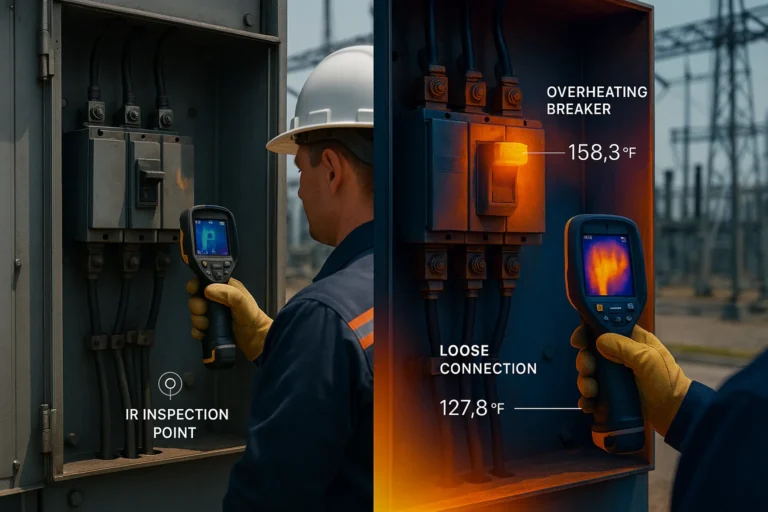
Thermal imaging (infrared thermography) uses specialized cameras to detect heat patterns emitted by electrical components. Under normal operation, electricity flowing through wires and connections generates predictable heat. Abnormal hotspots signal resistance issues such as loose connections, overloaded circuits, failing components, or insulation breakdown. These inspections are non-contact, safe, and can be performed on live systems without disruption.
In the UAE’s demanding climate — with extreme temperatures, dust, and high energy demands — thermal inspections are particularly valuable for preventing failures in both traditional and renewable electrical systems.
If your breakers trip repeatedly without an obvious cause, it often indicates overloaded circuits, loose connections, or imbalanced loads creating excess heat. Thermal imaging quickly pinpoints the exact location of the problem, preventing repeated disruptions and potential fire hazards.
Touching a panel or outlet that feels unusually warm is a clear warning sign. This could stem from poor connections, corrosion, or overloaded wiring. A thermal scan reveals the severity and exact source of the heat buildup.
Intermittent flickering often points to loose wiring, bad connections, or voltage drops caused by resistance. Thermal cameras detect these issues as localized hotspots in switches, junctions, or distribution boards.
A sudden spike in electricity costs without increased usage frequently results from inefficient electrical components generating excess heat and wasting energy. Thermal inspection identifies these energy thieves.
Any burnt plastic odor or brownish discoloration is a serious red flag. Thermal imaging can confirm overheating components before visible damage leads to fire.
Strange noises from panels, transformers, or motors often accompany overheating due to loose connections or failing insulation. Thermography provides visual confirmation.
If your building is over 15–20 years old or has not had a professional inspection recently, hidden degradation is likely. Thermal scans provide a comprehensive health check of aging systems.
After installing new equipment, EV chargers, solar systems, or heavy machinery, a thermal inspection verifies that connections are secure and loads are properly balanced.
If your property has experienced any electrical incident, regular thermal inspections are crucial to ensure no latent damage remains in the system.
Moisture, dust (common in UAE), or rodents can compromise connections. Thermal imaging detects resulting resistance heating even when damage is not fully visible.
Traditional methods like visual checks or multimeter testing often require shutting down systems and may miss load-dependent issues. Thermal imaging provides real-time, non-invasive insights under actual operating conditions, enabling early intervention.
Electrical faults cause a significant percentage of fires. Early detection dramatically reduces risk to life and property.
In commercial and industrial settings, unplanned outages can cost thousands per hour. Predictive maintenance via thermal scans prevents this.
Identifying and fixing minor issues prevents cascading failures and prolongs the life of expensive electrical assets.
Preventive inspections typically deliver 4:1 to 10:1 return on investment through avoided repairs and energy savings.
Many insurance providers and regulatory bodies (including those in the UAE) recognize thermography as best practice for risk management.
| Aspect | Thermal Imaging | Traditional Visual / Contact Testing | Key Advantage of Thermal |
|---|---|---|---|
| Safety | Non-contact, live system | High risk of shock/arc flash | Much safer for technicians and operations |
| Detection Stage | Early heat signatures | Late-stage visible symptoms | Predictive instead of reactive |
| Speed & Coverage | Rapid full-system scan | Slow, manual checking | Covers large facilities quickly |
| Downtime | Minimal / None | Often requires shutdown | Operations continue uninterrupted |
| Documentation | Visual thermograms + data | Basic notes and photos | Excellent for reports and trending |
| Cost Over Time | High long-term savings | Higher failure costs | Strong ROI |
Industrial Facility in Dubai: Recurring motor failures and high energy bills prompted a thermal inspection. We identified multiple loose busbar connections and overloaded circuits. Repairs prevented a potential major shutdown and reduced monthly energy costs by 14%.
Commercial Office Tower in Abu Dhabi: Flickering lights and warm panels led to discovery of corroded connections in the main distribution board caused by humidity ingress. Early intervention avoided a costly outage during peak summer.
Residential Villa Community in Sharjah: Multiple homeowners reported high bills and warm outlets. Comprehensive thermal surveys revealed faulty wiring from previous renovations, preventing potential electrical fires across the community.
Solar-Integrated Warehouse: Hotspots on combiner boxes and inverters were detected, ensuring optimal performance of the renewable system and protecting the investment.
Thermal imaging requires trained professionals for accurate interpretation. Results can be affected by environmental factors, low load conditions, or reflective surfaces. However, when performed correctly by experts like the team at Watts & Ergon, it remains one of the most powerful predictive maintenance technologies available.
If any of the signs mentioned above apply to your property, don’t delay. Our certified technicians use state-of-the-art FLIR thermal cameras and deliver detailed reports with clear recommendations. We serve residential, commercial, industrial, and renewable energy clients across the UAE.
With extensive experience in the UAE’s unique electrical environment, advanced equipment, and a customer-first approach, Watts & Ergon delivers reliable, non-disruptive thermal inspections that protect your assets and provide peace of mind. Our proactive solutions help prevent emergencies and optimize performance.
Contact Watts & Ergon today to schedule your thermal electrical inspection and take the first step toward safer, more efficient operations.
At Watts & Ergon, a DEWA-approved solar and electrical contractor, we provide complete EV charger installation services for villas, apartments, offices, hotels, and commercial properties across Dubai.
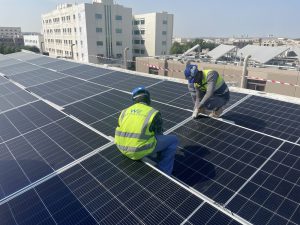
At Watts & Ergon, a DEWA-approved and ISO-certified solar EPC contractor, we specialize in designing and installing high-performance rooftop solar systems tailored specifically for warehouses, distribution centers, and industrial facilities across Dubai and the UAE.
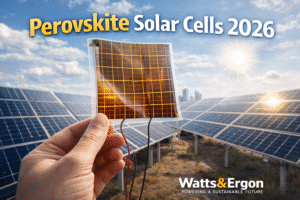
At Watts & Ergon, a DEWA-enrolled, ISO-certified solar EPC contractor, we design and install systems specifically engineered for UAE conditions. Here’s what actually works in 2026.