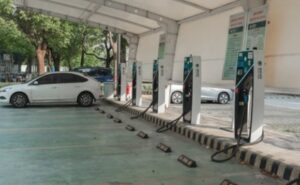
EV Charger Installation in Dubai: (2026 Guide)
At Watts & Ergon, a DEWA-approved solar and electrical contractor, we provide complete EV charger installation services for villas, apartments, offices, hotels, and commercial properties across Dubai.

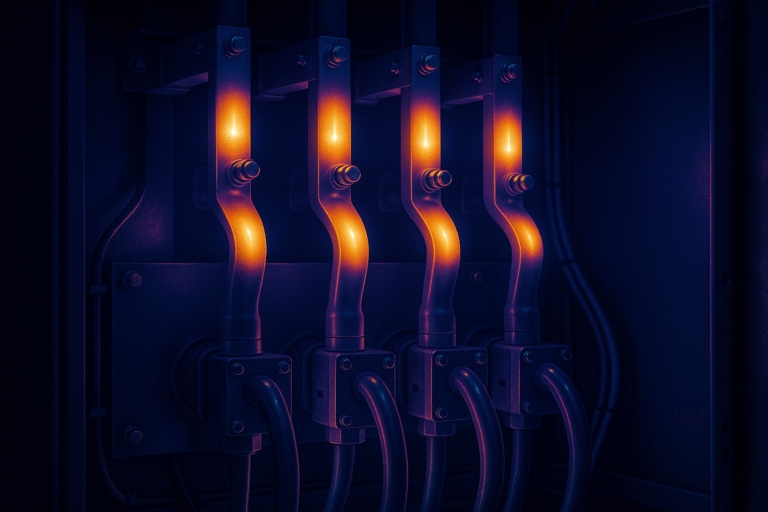
The United Arab Emirates is a global leader in renewable energy, with ambitious targets under the Energy Strategy 2050 and landmark projects like the Mohammed bin Rashid Al Maktoum Solar Park. With abundant sunshine (over 350 sunny days annually) and massive solar PV installations, maintaining peak performance of solar panels is critical. However, the harsh desert environment — extreme heat, sandstorms, dust accumulation, and high irradiance — accelerates wear and tear on solar assets.
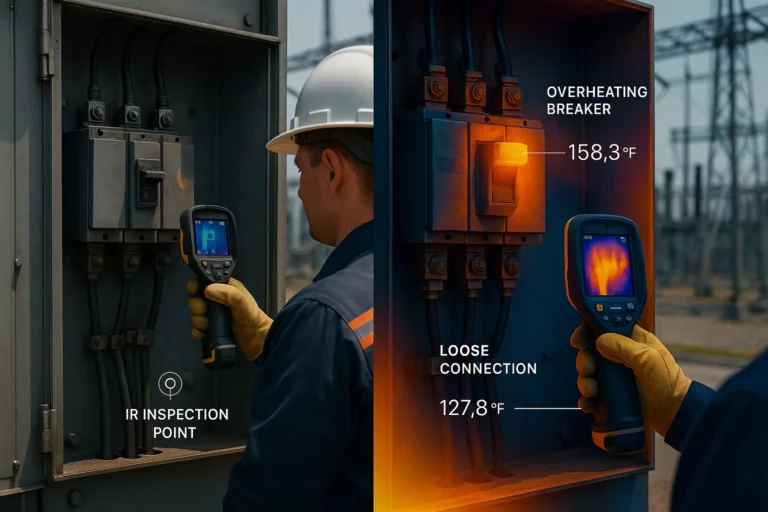
This is where **thermal imaging** (infrared thermography) becomes an indispensable tool for solar panel inspections. At **Watts & Ergon**, we provide specialized thermal imaging services tailored for the UAE’s solar industry, helping asset owners, developers, and facility managers detect hidden issues early, optimize energy output, and protect their investments.
Thermal imaging uses infrared cameras to visualize heat patterns on solar photovoltaic (PV) panels. Healthy solar cells convert sunlight into electricity efficiently, producing relatively uniform temperatures. Faulty cells, connections, or modules generate excess heat (hotspots), which appear clearly on thermograms.
Inspections are typically performed during daylight under operational load (ideally >600 W/m² irradiance) using ground-based cameras, pole-mounted systems, or drones for large-scale solar farms. This non-contact, non-destructive method allows rapid assessment of entire arrays without shutting down the system.
The UAE’s solar sector is booming. Installed solar capacity is projected to grow significantly, with the country aiming for substantial renewable contributions by 2030 and net-zero by 2050. Extreme temperatures (often exceeding 45°C), frequent dust storms, and high UV exposure create unique challenges:
Many performance issues are invisible to the naked eye. Thermal imaging identifies hotspots caused by cell cracks, faulty bypass diodes, junction box failures, and Potential Induced Degradation (PID) long before they cause noticeable power loss (often 10-30% per affected module).
Even a small percentage drop in efficiency across a large array translates to significant revenue loss. Regular thermal inspections help maintain optimal performance, ensuring maximum return on investment for utility-scale, commercial, and residential installations across Dubai, Abu Dhabi, and other emirates.
Hotspots can escalate into fire risks, especially in high-temperature environments. Early detection prevents costly damage and ensures compliance with safety standards.
Predictive maintenance allows targeted cleaning, repairs, or replacements instead of reactive fixes. Drone-based thermal surveys cover vast solar farms quickly and safely.
Detailed thermographic reports with timestamped images and temperature data provide strong evidence for manufacturer warranties and regulatory requirements in the UAE.
Thermal imaging excels at detecting dust-soiling patterns, heat-induced delamination, and shading issues common in desert installations.
| Inspection Method | Thermal Imaging | Visual Inspection | IV Curve Testing / Electroluminescence | Drone + Thermal Advantage |
|---|---|---|---|---|
| Speed & Coverage | Fast, large areas | Slow, limited | Time-consuming | Excellent for utility-scale farms |
| Non-Invasive | Yes, live system | Yes | Often requires shutdown | Minimal disruption |
| Early Detection | Excellent (heat signatures) | Poor (visible only) | Good but late-stage | Best predictive tool |
| Cost Effectiveness | High ROI | Low upfront | Higher operational cost | Quick payback |
| UAE Desert Suitability | Highly effective | Limited by dust | Challenging in heat | Optimal for harsh conditions |
Utility-Scale Solar Farm (Dubai): Watts & Ergon conducted a drone thermal survey on a 100+ MW installation. The inspection identified over 200 hotspots and significant soiling on the eastern edges due to prevailing winds. Targeted cleaning and module replacements restored full performance, preventing an estimated 8-12% annual production loss.
Commercial Rooftop Installation (Abu Dhabi): A large warehouse owner noticed lower-than-expected output. Thermal imaging revealed multiple faulty bypass diodes and junction box overheating caused by extreme daytime temperatures. Prompt repairs extended the system life and improved output by 18%.
Residential Community (Sharjah): Routine thermal inspections under a community solar program helped homeowners identify shading from new constructions and dust buildup, ensuring consistent savings on electricity bills.
While highly effective, thermal imaging requires proper conditions and trained interpretation. Reflections, varying irradiance, or recent cleaning can affect results. In the UAE, extreme heat demands experienced operators who understand local environmental impacts. It is most powerful as part of a comprehensive O&M strategy.
Integration of AI-powered analysis, continuous monitoring sensors, and advanced drone fleets is revolutionizing the industry. As the UAE expands its solar footprint, predictive maintenance using thermal imaging will be key to achieving long-term sustainability and energy security goals.
Watts & Ergon brings deep local expertise in the UAE’s energy sector, state-of-the-art FLIR and drone thermal equipment, and a team of certified professionals. We deliver fast, accurate, and actionable insights that protect your solar investments and maximize returns in the region’s demanding climate.
Contact us today for professional thermal imaging surveys, preventive maintenance programs, or consultations across Dubai, Abu Dhabi, Sharjah, and beyond.
At Watts & Ergon, a DEWA-approved solar and electrical contractor, we provide complete EV charger installation services for villas, apartments, offices, hotels, and commercial properties across Dubai.
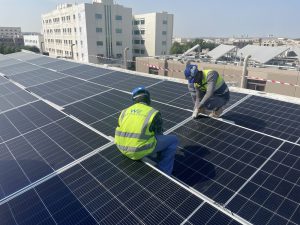
At Watts & Ergon, a DEWA-approved and ISO-certified solar EPC contractor, we specialize in designing and installing high-performance rooftop solar systems tailored specifically for warehouses, distribution centers, and industrial facilities across Dubai and the UAE.
At Watts & Ergon, a DEWA-enrolled, ISO-certified solar EPC contractor, we design and install systems specifically engineered for UAE conditions. Here’s what actually works in 2026.