In today’s fast-paced industrial, commercial, and residential environments, electrical systems form the backbone of operations. From powering manufacturing plants to keeping office buildings lit and functional, reliable electricity is non-negotiable. However, electrical faults often develop silently, leading to unexpected downtime, costly repairs, safety hazards, and even catastrophic fires. This is where thermal imaging, also known as infrared thermography, emerges as a game-changing technology for proactive electrical inspections.
At Watts & Ergon, we specialize in advanced electrical services, including professional thermal imaging surveys that help businesses and homeowners identify problems before they escalate. In this comprehensive guide, we’ll explore the science behind thermal imaging, its numerous benefits, real-world applications, best practices, and why integrating it into your maintenance routine is essential.
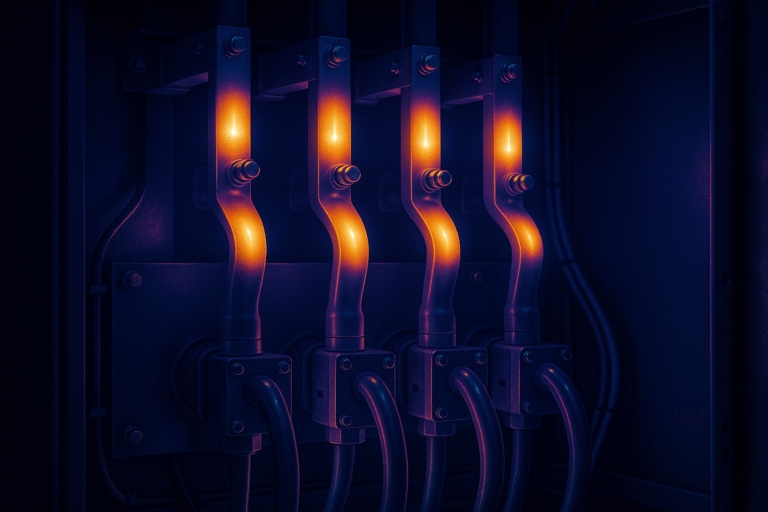
Thermal imaging cameras detect infrared radiation (heat) emitted by objects and convert it into visible images called thermograms. Every object above absolute zero emits infrared energy, and electrical components under load naturally generate heat due to resistance. Abnormal heat patterns — hot spots — signal issues like loose connections, overloaded circuits, imbalanced loads, or failing components.
Unlike traditional inspection methods that require physical contact or system shutdowns, thermal imaging is non-contact and non-invasive. Technicians can scan energized equipment from a safe distance, capturing real-time data without interrupting operations. Modern cameras display temperature differences in color-coded palettes, allowing quick identification of anomalies.
Key Principles
- Emissivity adjustments for accurate readings on different materials
- Delta T analysis — comparing similar components
- Load considerations — best results under normal operating conditions
1. Early Detection of Potential Failures
One of the greatest advantages is the ability to spot problems long before they cause failures. High electrical resistance produces heat, which thermal cameras detect as hotspots. Issues like loose terminals or overloaded breakers often show as small temperature rises initially.
2. Enhanced Safety for Personnel and Property
Thermal imaging eliminates the need for close contact with live components, significantly reducing the risk of arc flash, electric shock, and electrical fires. It supports compliance with standards such as NFPA 70B.
3. Reduced Downtime and Operational Continuity
Unplanned outages are extremely costly. Thermal imaging enables predictive maintenance, allowing repairs to be scheduled during planned downtime rather than reacting to emergencies.
4. Significant Cost Savings and ROI
A single thermal inspection can prevent failures that cost thousands or millions. Many organizations see returns of 4:1 or higher. Additional savings come from improved energy efficiency and potentially lower insurance premiums.
5. Comprehensive Documentation and Compliance
High-quality thermograms and detailed reports provide visual proof for audits, insurance, and regulatory requirements. Trending analysis over time helps predict future maintenance needs.
6. Versatility Across Applications
Thermal imaging works on switchgear, motors, transformers, busbars, UPS systems, generators, and more.
Common Electrical Issues Detected by Thermal Imaging
- Loose or corroded connections
- Overloaded circuits and breakers
- Imbalanced phases
- Failing components (capacitors, fuses, contacts)
- Insulation breakdown
- Harmonics and poor power quality
| Aspect |
Thermal Imaging |
Traditional Methods |
Advantage |
| Safety |
Non-contact, live scanning |
Often requires contact or shutdown |
Greatly reduced risk |
| Speed |
Scans large areas quickly |
Time-consuming, point-by-point |
Hours vs. days |
| Detection |
Early-stage heat anomalies |
Detects issues when symptomatic |
Predictive maintenance |
| Downtime |
Minimal to none |
Often requires outages |
Continuous operations |
| Documentation |
Visual thermograms + data |
Notes and basic photos |
Superior reporting |
| Cost Effectiveness |
High ROI |
Higher long-term failure costs |
Long-term savings |
Real-World Case Studies
Industrial Manufacturing: A pharmaceutical plant avoided over $100,000 in potential downtime after Watts & Ergon identified loose connections in critical panels during a thermal survey.
Commercial Office Complex: Recurring breaker trips were resolved by correcting overloaded circuits and poor connections discovered via thermal imaging.
Data Center: Early detection of failing UPS components prevented costly outages and protected critical servers.
Best Practices for Effective Thermal Imaging Inspections
- Hire certified Level I or II thermographers
- Schedule regular inspections (annual or semi-annual)
- Perform scans under normal operating load (≥40% recommended)
- Combine with other diagnostic tools when needed
- Maintain historical records for trending analysis
- Prioritize repairs based on severity
While highly effective, thermal imaging requires trained professionals and works best under adequate load. Environmental factors and material emissivity must be considered. It is most powerful when used alongside other maintenance techniques.
The Future of Thermal Imaging
Advancements in AI analysis, higher-resolution cameras, drone integration, and continuous IoT monitoring are making thermal imaging even more powerful and accessible.
With years of experience and state-of-the-art equipment, our certified thermographers deliver thorough, non-disruptive inspections and actionable recommendations. We help you protect your people, assets, and operations.
Contact Watts & Ergon today to schedule your professional thermal imaging inspection.