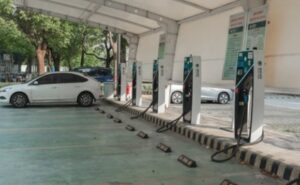
EV Charger Installation in Dubai: (2026 Guide)
At Watts & Ergon, a DEWA-approved solar and electrical contractor, we provide complete EV charger installation services for villas, apartments, offices, hotels, and commercial properties across Dubai.

At Watts & Ergon, a DEWA-approved and ISO-certified electrical services company based in Dubai, we help building owners, facility managers, and developers achieve full compliance while enhancing safety and efficiency.
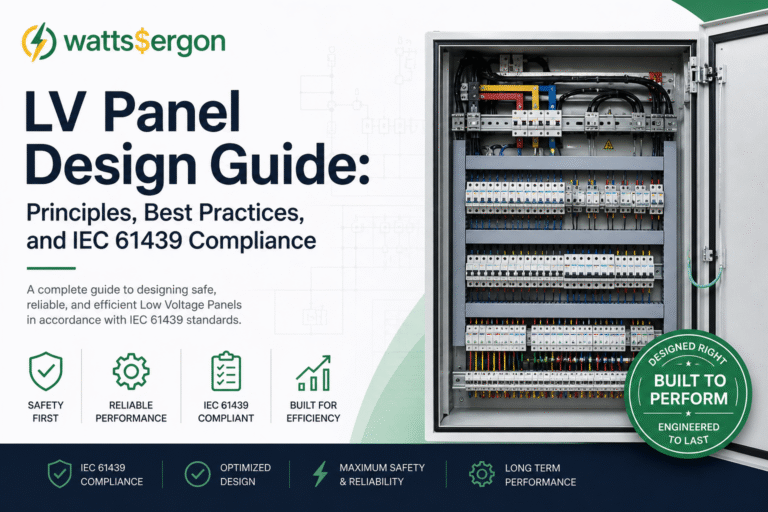
Commercial buildings — offices, malls, hotels, hospitals, and high-rises — are high-occupancy environments where electrical systems carry enormous loads 24/7. A single electrical failure can lead to devastating consequences: fires, injuries, business interruption, and significant financial losses. Adhering to the highest electrical safety standards is not optional; it is a legal, moral, and operational necessity.
At Watts & Ergon, a DEWA-approved and ISO-certified electrical services company based in Dubai, we help building owners, facility managers, and developers achieve full compliance while enhancing safety and efficiency. This extensive guide (over 2,450 words) covers the most important electrical safety standards, their practical application in commercial buildings, compliance checklists, and how professional expertise ensures long-term protection.
Commercial properties face unique challenges: high power density, complex distribution systems, constant modifications, and large numbers of people. According to global statistics, electrical faults account for a significant percentage of building fires. In the UAE’s extreme climate, heat, dust, and humidity further increase risks.
Compliance with standards reduces liability, improves insurance terms, ensures business continuity, and demonstrates commitment to occupant safety.
DEWA sets the primary local standards for all electrical installations in Dubai. Key requirements include proper earthing, circuit protection, periodic inspections, and use of approved materials.
Widely referenced globally and in the UAE for commercial installations. Covers wiring methods, overcurrent protection, grounding, and special occupancies.
IEC 60364 is the foundation for low-voltage installations. Other relevant standards include IEC 61439 for switchgear and IEC 62305 for lightning protection.
Emphasizes preventive maintenance programs critical for commercial facilities.
Often used alongside local codes in the UAE.
| Standard | Focus Area | Key Requirements for Commercial Buildings | Relevance in UAE |
|---|---|---|---|
| DEWA Regulations | Local Installation & Safety | Approved materials, earthing, load calculations, annual inspections | Mandatory in Dubai |
| NFPA 70 (NEC) | Wiring & Protection | Circuit sizing, grounding, arc-fault protection | Highly referenced |
| IEC 60364 | Low Voltage Installations | Protection against electric shock, thermal effects, overcurrent | International benchmark |
| NFPA 70B | Maintenance | Preventive maintenance, thermographic surveys | Recommended for facilities |
| IEC 61439 | Switchgear Assemblies | Verification of temperature rise, short-circuit withstand | Distribution boards & panels |
Accurate load calculations prevent overloading. Commercial buildings must account for diversity factors, future expansion, and peak loads from HVAC, lighting, elevators, and IT equipment.
Effective earthing protects against faults. DEWA requires specific earth resistance values and regular testing.
Use of correctly rated MCBs, MCCBs, and RCDs/RCBOs. Coordination studies ensure selective tripping.
Critical for high-voltage and large commercial panels. NFPA 70E provides guidelines for safe working practices and PPE.
SPDs and lightning arrestors are mandatory in tall buildings and lightning-prone areas.
| Category | Requirements | Frequency | Responsible Party |
|---|---|---|---|
| Distribution Boards | Proper labeling, IP rating, thermal scanning | Annual | Qualified Electrician |
| Earthing System | Resistance < 1 Ohm, continuity test | Every 6-12 months | Certified Technician |
| Circuit Protection | RCD testing, coordination study | Quarterly test, Annual full check | Maintenance Team |
| Emergency Lighting | Backup duration test (min 3 hours) | Monthly | Facility Manager |
| Fire Alarm Integration | Electrical interface compliance | Annual | Specialist Contractor |
| Arc Flash Labeling | Incident energy calculations on panels | Every 5 years or after modifications | Engineer |
| Documentation | As-built drawings, test records | Updated after every change | Building Owner |
High density IT loads, UPS systems, and raised flooring require special attention to harmonic mitigation and fire-rated penetrations.
Extensive public address and emergency systems, plus high lighting and HVAC loads.
Guest room safety, kitchen equipment protection, and backup generators.
Isolated power systems, redundant supplies, and stringent infection control during maintenance.
| Building Type | Critical Standard Focus | Additional Requirements |
|---|---|---|
| Office Buildings | NFPA 70 + DEWA | Power quality for sensitive equipment |
| Retail Malls | IEC 60364 | Public safety and egress lighting |
| Hotels | NFPA 70B | Guest area shock protection |
| Hospitals | IEC 60364-7-710 | Medical location classifications |
Overloaded circuits, improper grounding, use of non-approved materials, and lack of documentation are frequent issues found during inspections. Watts & Ergon’s audit services help identify and correct these proactively.
Case Study 1: Business Bay Commercial Tower
A 25-floor office building faced DEWA compliance issues with outdated distribution boards. Watts & Ergon performed a full electrical audit, upgraded panels to IEC 61439 standards, installed RCBOs, and implemented thermal scanning protocols. The building passed inspection with zero violations and reduced nuisance tripping by 90%.
Case Study 2: JLT Shopping Mall
High harmonic distortion from LED lighting caused repeated breaker trips. Our team installed harmonic filters, conducted arc flash studies, and trained facility staff. Energy efficiency improved by 12% as a bonus.
Case Study 3: Healthcare Clinic in Dubai Healthcare City
We designed and installed a compliant isolated power system meeting IEC medical location standards, ensuring patient safety and uninterrupted power for critical equipment.
While building owners are ultimately responsible, partnering with licensed professionals ensures correct interpretation and implementation of complex standards. Watts & Ergon provides end-to-end services including design review, installation, testing, certification, and ongoing maintenance.
Smart buildings, IoT monitoring, renewable integration (solar), and EV charging stations are driving updates to standards. DEWA continues to evolve requirements around net metering, energy efficiency, and digital documentation.
Watts & Ergon, is a trusted DEWA-approved contractor with extensive experience in commercial electrical projects across the UAE. Our advantages include:
Watts & Ergon — Empowering Safe, Compliant & Sustainable Electrical Solutions.
📍 Dubai, UAE | DEWA Approved | ISO Certified
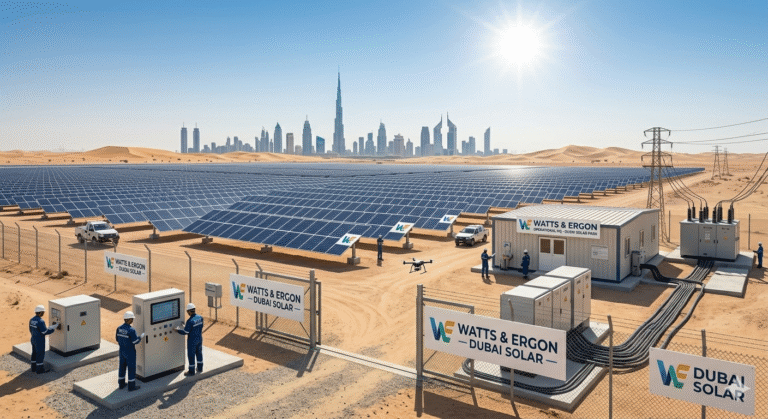
At Watts & Ergon, a DEWA-approved solar and electrical contractor, we provide complete EV charger installation services for villas, apartments, offices, hotels, and commercial properties across Dubai.
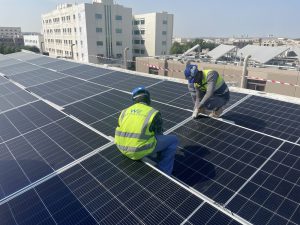
At Watts & Ergon, a DEWA-approved and ISO-certified solar EPC contractor, we specialize in designing and installing high-performance rooftop solar systems tailored specifically for warehouses, distribution centers, and industrial facilities across Dubai and the UAE.
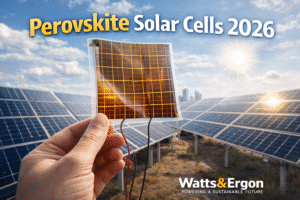
At Watts & Ergon, a DEWA-enrolled, ISO-certified solar EPC contractor, we design and install systems specifically engineered for UAE conditions. Here’s what actually works in 2026.