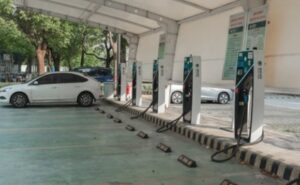
EV Charger Installation in Dubai: (2026 Guide)
At Watts & Ergon, a DEWA-approved solar and electrical contractor, we provide complete EV charger installation services for villas, apartments, offices, hotels, and commercial properties across Dubai.

At Watts & Ergon , a DEWA-approved and ISO-certified electrical services company in Dubai, we’ve helped hundreds of residential and commercial clients diagnose and resolve persistent circuit breaker problems.
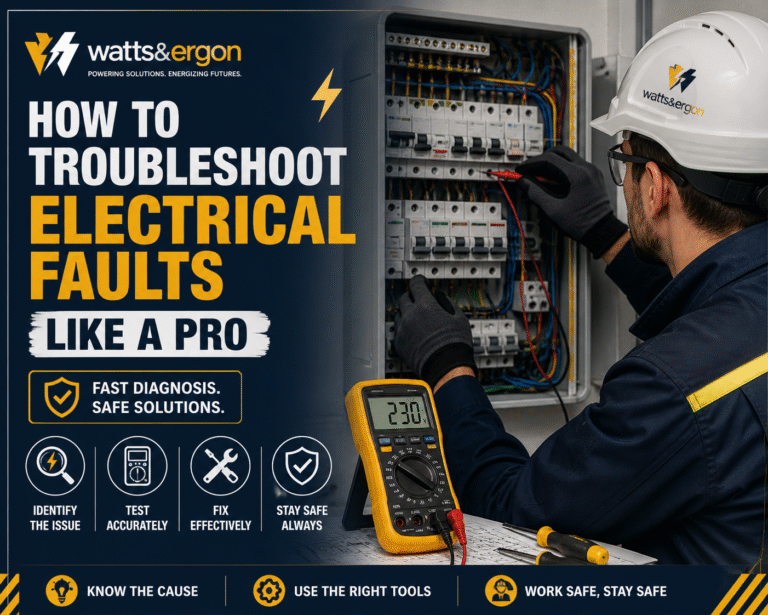
Circuit breakers are the silent guardians of your electrical system. They protect your property and loved ones by interrupting power when something goes wrong. But when a breaker keeps tripping repeatedly, it becomes a frustrating and potentially dangerous issue. Ignoring frequent tripping can lead to fire hazards, equipment damage, or complete power loss.
At Watts & Ergon, a DEWA-approved and ISO-certified electrical services company in Dubai, we’ve helped hundreds of residential and commercial clients diagnose and resolve persistent circuit breaker problems. This comprehensive 2,400+ word guide explores every aspect — from basic principles to advanced diagnostics, practical fixes, and long-term prevention strategies.
Circuit breakers are automatic switches designed to protect electrical circuits from damage caused by overload, short circuits, or ground faults. They monitor current flow and “trip” (open the circuit) when the current exceeds safe levels.
There are three main types commonly used in the UAE:
The most frequent cause. When too many high-power appliances (air conditioners, water heaters, microwaves, EV chargers) run on the same circuit, the total current exceeds the breaker’s rating.
Occurs when a hot wire touches a neutral or ground wire, causing a sudden surge of current. Often due to damaged insulation, loose wires, or faulty appliances.
Similar to short circuits but involving current leaking to ground — common in wet areas like bathrooms or outdoor outlets.
A malfunctioning device can draw excessive current or create internal shorts.
Thermal expansion, vibration, and age cause terminals to loosen, increasing resistance and heat, which eventually trips the breaker.
Extreme heat (up to 50°C), dust accumulation, and humidity accelerate wear on electrical components.
| Cause | Symptoms | Common Locations | Risk Level |
|---|---|---|---|
| Overloaded Circuit | Trips after adding new device or during peak hours | Kitchen, Living Room | Medium |
| Short Circuit | Immediate trip when device is turned on | Any outlet or wiring | High (Fire Risk) |
| Ground Fault | Trips when touching appliance or in wet conditions | Bathroom, Outdoor, AC Units | High (Shock Risk) |
| Faulty Appliance | Trips only when specific device runs | Fridge, Washing Machine, AC | Medium-High |
| Loose Connections | Intermittent tripping, burning smell | Distribution Board | High |
| Undersized Wiring | Frequent trips under moderate load | Older Villas | Medium |
| Harmonics from Inverters/EV Chargers | Random tripping in modern setups | New Installations | Medium |
Redistribute loads across multiple circuits or install dedicated circuits for high-power appliances like air conditioners and water heaters.
Inspect and replace damaged wiring, insulation, or faulty outlets. RCDs should be tested monthly by pressing the test button.
Test suspect devices on other circuits or have them professionally serviced.
| Problem | DIY Checks | Professional Fix | Estimated Cost (AED) |
|---|---|---|---|
| Overload | Reduce connected devices | Add new circuits / Sub-DB | 800 – 2,500 |
| Short Circuit | Inspect visible wires | Trace & repair wiring | 1,200 – 4,000 |
| Ground Fault | Check GFCI outlets | Install/Replace RCBO | 600 – 1,800 |
| Loose Connections | None safe | Thermal scan + re-torque | 1,500 – 3,500 |
| Aging Panel | Visual inspection | Upgrade Distribution Board | 4,000 – 12,000 |
At Watts & Ergon, we often use infrared thermal imaging to detect hot spots in distribution boards and connections that indicate loose terminals or overloads before they cause repeated tripping. This non-invasive method is highly effective in the UAE’s harsh climate.
If the breaker trips immediately after resetting, you smell burning, or experience frequent tripping across multiple circuits, stop DIY attempts and contact licensed professionals immediately.
Case Study 1: Jumeirah Villa
A homeowner reported their main breaker tripping every evening. Our team discovered overloaded circuits from multiple AC units and a new EV charger. We installed a dedicated sub-DB and performed full DB maintenance. Tripping stopped completely.
Case Study 2: Commercial Office in Business Bay
Frequent tripping in server room circuits was traced to loose busbar connections using thermal imaging. Re-torquing and panel servicing resolved the issue, preventing potential downtime costing thousands of dirhams.
Case Study 3: Apartment in Downtown Dubai
Ground fault tripping was caused by water ingress in an outdoor AC unit. We replaced damaged wiring and upgraded to weatherproof enclosures.
DEWA requires proper circuit protection and periodic inspections. Non-compliant installations can lead to fines or service disconnection. Watts & Ergon ensures all work meets or exceeds DEWA standards.
Consider upgrading from old MCB panels to modern RCBO panels with surge protection. This provides individual protection per circuit and better fault detection.
| Upgrade Option | Benefits | Typical Cost (AED) |
|---|---|---|
| RCBO Panel Replacement | Individual earth leakage protection | 3,500 – 8,000 |
| Smart Circuit Monitoring | Real-time alerts via app | 2,800 – 6,500 |
| Full DB Modernization | Future-proof with SPDs | 8,000 – 15,000 |
Watts & Ergon, is your trusted partner for all electrical issues in the UAE. As a DEWA-approved contractor, we offer:
Watts & Ergon — Empowering Safe & Reliable Electrical Solutions.
📍 Dubai, UAE | DEWA Approved | ISO Certified

At Watts & Ergon, a DEWA-approved solar and electrical contractor, we provide complete EV charger installation services for villas, apartments, offices, hotels, and commercial properties across Dubai.
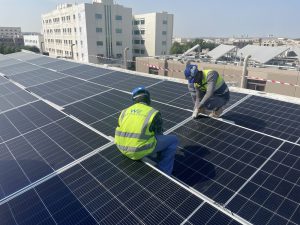
At Watts & Ergon, a DEWA-approved and ISO-certified solar EPC contractor, we specialize in designing and installing high-performance rooftop solar systems tailored specifically for warehouses, distribution centers, and industrial facilities across Dubai and the UAE.
At Watts & Ergon, a DEWA-enrolled, ISO-certified solar EPC contractor, we design and install systems specifically engineered for UAE conditions. Here’s what actually works in 2026.