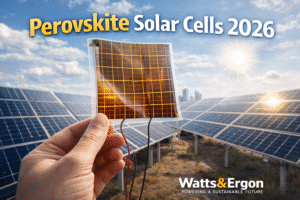
In the rapidly evolving landscape of renewable energy, the transition from “adding solar to a building” to “building with solar” has arrived. Building-Integrated Photovoltaics (BIPV) represents a revolutionary shift where solar components are no longer just an afterthought—they are the very fabric of the structure itself.
At Watts & Ergon, , we are seeing a massive shift in the UAE market toward these aesthetic, dual-purpose solutions that turn every square meter of a building’s envelope into a power-generating asset.
Unlike traditional solar panels (BAPV – Building Applied Photovoltaics) which are mounted onto an existing roof using rails and brackets, BIPV replaces conventional building materials.
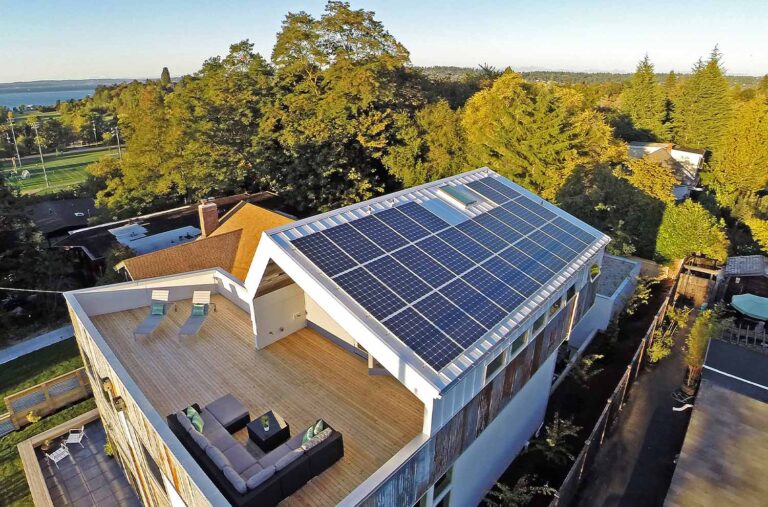
Imagine a skyscraper where the glass windows generate electricity, or a residential villa where the roof tiles are the solar panels. BIPV serves a dual function:
- Structural Integrity: It acts as a weather barrier, providing insulation, wind protection, and noise reduction.
- Energy Generation: It converts sunlight into clean electricity for the building’s internal use.
Why BIPV is a Game-Changer for the UAE
The Middle East, and Dubai in particular, presents a unique environment for BIPV. With high solar irradiance and a preference for glass-heavy “curtain wall” architecture, the potential for energy harvesting is immense.
- Aesthetics: BIPV modules come in various colors, transparencies, and textures. Architects no longer have to hide “ugly” panels; they can design with “solar glass.”
- Space Efficiency: In dense urban areas like Downtown Dubai or Dubai Marina, roof space is limited. BIPV allows you to use the entire vertical surface area of a building.
- Material Savings: Because BIPV replaces materials like glass cladding or roof tiles, the net cost of the solar system is reduced by the “avoided cost” of the traditional materials.
- Thermal Regulation: Modern BIPV glass can be designed to block significant infrared heat, reducing the building’s cooling load and lowering utility bills.
BIPV vs. Conventional Solar Panels
| Feature |
Conventional Solar (BAPV) |
Building-Integrated (BIPV) |
| Primary Role |
Electricity generation only |
Building material + Power generation |
| Installation |
Mounted on top of existing surfaces |
Built-in during construction/renovation |
| Aesthetics |
Visible panels and racking |
Seamless integration (invisible) |
| Customization |
Standard sizes/colors |
Fully customizable (size, color, transparency) |
| Dual Savings |
Saves on electricity bills |
Saves on electricity + building material costs |
Implementing BIPV requires more than just electrical expertise; it requires a deep understanding of structural engineering and architectural design. At Watts & Ergon, we provide the technical guidance and high-quality components—from industrial inverters to specialized wiring—needed to make BIPV a reality.
Ready to turn your building into a power plant?
Contact
Watts & Ergon, today to discuss how we can integrate BIPV into your next project.