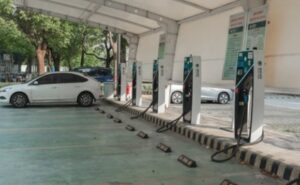
EV Charger Installation in Dubai: (2026 Guide)
At Watts & Ergon, a DEWA-approved solar and electrical contractor, we provide complete EV charger installation services for villas, apartments, offices, hotels, and commercial properties across Dubai.

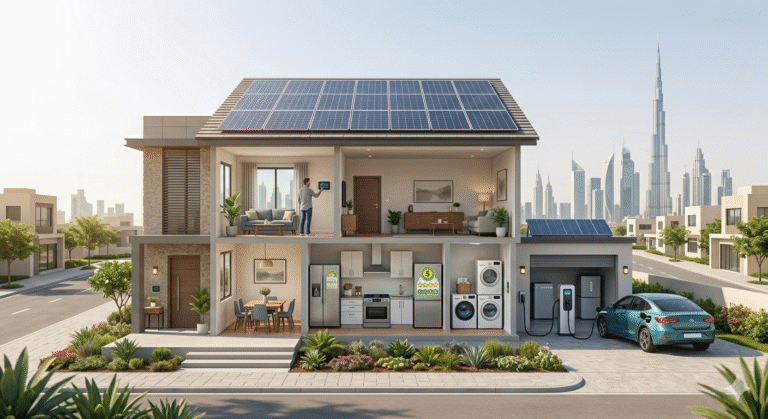
As temperatures rise, so do electricity bills. At Watts & Ergon, the question we hear most often during the summer months is: “Is it actually possible to run my air conditioner entirely on solar energy?”
The short answer is yes. However, achieving maximum efficiency involves a balance between energy consumption and strategic power generation.
Running an AC unit requires significant power, especially during the “startup” phase. There are three primary ways to achieve solar cooling:
Your solar panels feed energy into your home. If the panels produce enough, they power the AC. At night, the system automatically pulls power from the utility grid.
To run an AC at night using solar, you need a substantial battery bank. Panels charge the batteries by day to power the AC whenever needed.
Modern air conditioners can take DC power directly from solar panels and AC power from the grid simultaneously, optimizing based on sunlight.
| Feature | Conventional AC | Solar-Powered AC |
|---|---|---|
| Energy Source | 100% Utility Grid | Sunlight + Grid Backup |
| Monthly Cost | High (Seasonal Peaks) | Low to Zero |
| Environmental Impact | High Carbon Footprint | Eco-Friendly |
| Initial Investment | Lower | Higher Upfront |
| Grid Independence | None | Partial to Full |
To run a standard 1.5-ton AC unit, you generally need to consider:
At Watts & Ergon, we specialize in high-efficiency cooling. We don’t just “install panels”—we calculate your thermal load to ensure your system is perfectly sized for comfort.
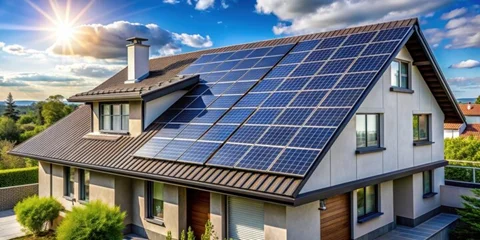
At Watts & Ergon, a DEWA-approved solar and electrical contractor, we provide complete EV charger installation services for villas, apartments, offices, hotels, and commercial properties across Dubai.
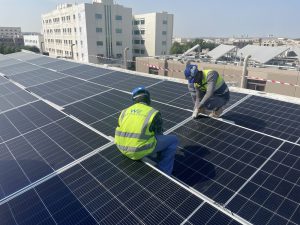
At Watts & Ergon, a DEWA-approved and ISO-certified solar EPC contractor, we specialize in designing and installing high-performance rooftop solar systems tailored specifically for warehouses, distribution centers, and industrial facilities across Dubai and the UAE.
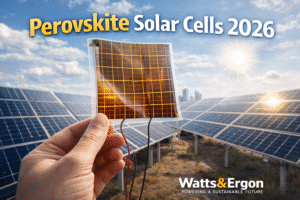
At Watts & Ergon, a DEWA-enrolled, ISO-certified solar EPC contractor, we design and install systems specifically engineered for UAE conditions. Here’s what actually works in 2026.