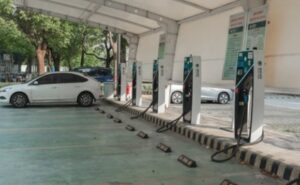
EV Charger Installation in Dubai: (2026 Guide)
At Watts & Ergon, a DEWA-approved solar and electrical contractor, we provide complete EV charger installation services for villas, apartments, offices, hotels, and commercial properties across Dubai.

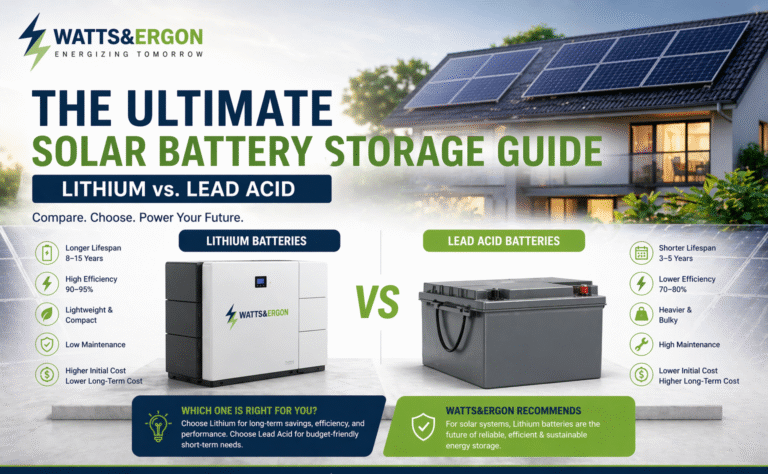
The global shift toward renewable energy is no longer merely an environmental aspiration; it is an economic and structural necessity. At the center of this revolution lies the ability to store energy. Solar panels are the generators, but the battery is the reservoir. Without a sophisticated storage solution, a solar system remains tethered to the inefficiencies of the utility grid.
At Watts & Ergon, , we define energy independence as the ability to generate, store, and manage your own power with zero reliance on external volatility. This guide serves as a technical deep-dive into the two most prevalent electrochemical storage solutions: Lead Acid and Lithium-ion.
Lead acid batteries have powered our world since 1859. Their chemistry involves lead plates submerged in sulfuric acid. While reliable, they are limited by their electrochemical properties. Specifically, they suffer from “peukert’s law,” meaning their usable capacity decreases as the discharge rate increases.
Flooded Lead Acid (FLA): These are open-vented batteries. They require a rigorous maintenance schedule, including regular hydrometer testing and the addition of distilled water to prevent plate sulfation.
Sealed Lead Acid (VRLA): Utilizing either Absorbent Glass Mat (AGM) or Gel technology, these are recombinant batteries that don’t require water maintenance but are highly sensitive to overcharging.
Modern solar storage has been redefined by Lithium Iron Phosphate (LiFePO4). Unlike the lithium-cobalt found in consumer electronics, LiFePO4 is designed for stationary storage. It offers high thermal stability and a crystalline structure that remains intact through thousands of charge-discharge cycles.
| Metric | Lead Acid (Deep Cycle) | Lithium (LiFePO4) |
|---|---|---|
| Usable Capacity (DoD) | 50% Recommended | 80% – 95% Recommended |
| Cycle Life (@50% DoD) | 500 – 1,200 Cycles | 6,000 – 10,000 Cycles |
| Energy Density | 30-50 Wh/kg | 120-160 Wh/kg |
| Charge Efficiency | 85% – 90% | 98% |
| Voltage Sag | Significant under load | Minimal; Flat voltage curve |
| Maintenance | Regular inspection required | Passive (BMS controlled) |
The most critical error in solar procurement is prioritizing upfront capital expenditure (CAPEX) over operational expenditure (OPEX). While a Lead Acid bank may cost $2,000 and a Lithium bank $5,000, the LCOS of Lithium is nearly 50% lower over a ten-year period. This is because Lead Acid requires at least two full replacements and more solar panels to account for the charging inefficiency.
Lead is a heavy metal with high toxicity, though its recycling rate is impressive. Lithium, while requiring water-intensive mining, offers a longer service life, reducing the frequency of manufacturing and disposal. Safety-wise, Watts & Ergon installs systems equipped with advanced Battery Management Systems (BMS) that prevent over-voltage, under-voltage, and thermal events.
We provide comprehensive system design, including peak-load shaving strategies and off-grid resilience planning. Our certified technicians ensure that every installation meets the highest safety codes, protecting your property and your investment.
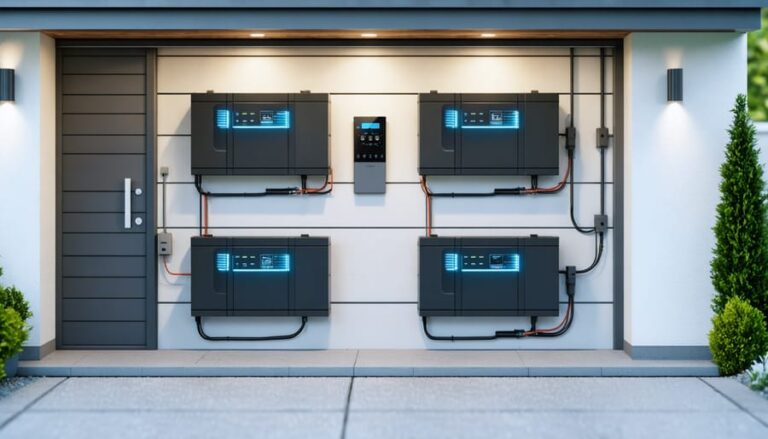
At Watts & Ergon, a DEWA-approved solar and electrical contractor, we provide complete EV charger installation services for villas, apartments, offices, hotels, and commercial properties across Dubai.
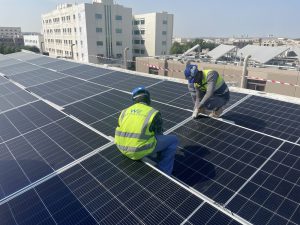
At Watts & Ergon, a DEWA-approved and ISO-certified solar EPC contractor, we specialize in designing and installing high-performance rooftop solar systems tailored specifically for warehouses, distribution centers, and industrial facilities across Dubai and the UAE.
At Watts & Ergon, a DEWA-enrolled, ISO-certified solar EPC contractor, we design and install systems specifically engineered for UAE conditions. Here’s what actually works in 2026.