DEWA-approved solar in UAE

Net Metering in UAE – How It Works & Benefits

At Watts & Ergon, we specialize in helping clients navigate these regulations to transform their rooftops into high-yield power plants. In this guide, we break down exactly how net metering works in the UAE today and why it is the smartest investment for your property.

As the UAE marches toward its “Net Zero 2050” goal, 2026 has become a landmark year for solar energy. For homeowners and businesses, the most significant advancement isn’t just the efficiency of the panels—it’s the financial mechanism that makes them pay for themselves: Net Metering.

At Watts & Ergon, we specialize in helping clients navigate these regulations to transform their rooftops into high-yield power plants. In this guide, we break down exactly how net metering works in the UAE today and why it is the smartest investment for your property.

What is Net Metering?

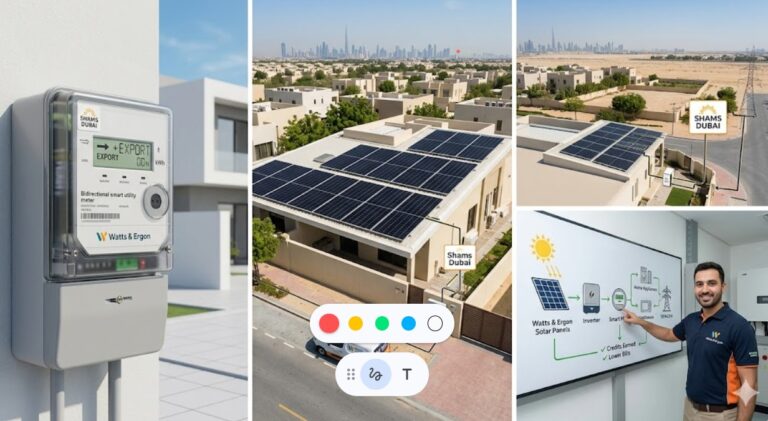
Net metering is a billing arrangement that allows solar energy producers to export excess electricity back to the national grid. Instead of needing massive, expensive battery banks to store power for the night, the grid acts as your “virtual battery.”

How It Works (The 3-Step Process)

  1. Generation & Use: Your solar panels produce DC power, which an inverter converts to AC for your home. Your appliances use this solar energy first.
  2. Exporting Surplus: During the peak of the UAE summer day, your panels often produce more than you can use. This excess flows back to the utility provider (DEWA in Dubai, ADDC/AADC in Abu Dhabi).
  3. Automatic Crediting: Your bi-directional smart meter tracks the export. Your utility company then credits your account at the same retail rate you pay for electricity.

Net Metering Programs by Region (2026 Update)

While the concept is the same, the programs differ slightly across the Emirates.

Feature Shams Dubai (DEWA) Abu Dhabi (ADDC/AADC)
Policy Name Shams Dubai Initiative Solar PV Self-Supply Policy
Credit Rate 1:1 Retail Rate 1:1 Retail Rate
Rollover Indefinite (Monthly/Yearly) Indefinite (Monthly/Yearly)
System Limit Up to 1 MW per plot Based on connected load
Typical ROI 4–6 Years 5–7 Years

Key Benefits of Net Metering for UAE Residents

  • Drastic Reduction in Utility Bills: Reduce your DEWA or ADDC bill by up to 90%. In 2026, this provides immediate monthly liquidity.
  • Elimination of Battery Costs: The grid handles the storage for you, lowering the initial cost of your solar installation.
  • Protection Against Tariff Hikes: Hedge against future increases in electricity costs by fixing your generation cost now.
  • Sustainability & Real Estate Value: Solar-equipped properties command a 5%–8% premium in the current UAE market.

The Numbers: Residential ROI Example (10 kW System)

Typical breakdown for a medium-sized villa in the UAE:

  • Average System Cost: AED 22,000 – AED 35,000 (Including approvals)
  • Annual Energy Production: ~16,500 kWh
  • Annual Savings (at AED 0.30/kWh): ~AED 4,950
  • Payback Period: Approximately 5.2 Years
  • Total Profit (Over 25 Years): ~AED 95,000+

Essential Requirements for Compliance

To benefit from net metering in 2026, your system must meet strict regulatory standards:

  • Approved Components: Only use panels and inverters on the officially approved equipment lists.
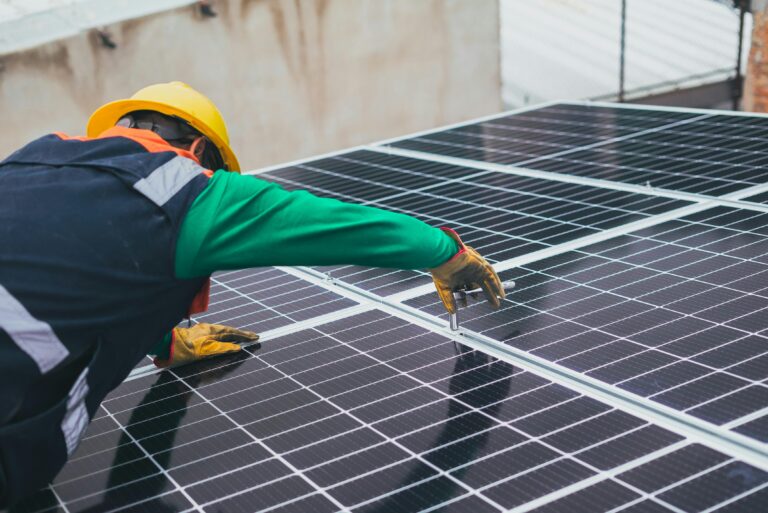
  • Certified Contractor: Applications must be submitted by a certified solar contractor like Watts & Ergon.
  • Bi-Directional Metering: Your old meter will be replaced with a smart meter to measure two-way energy flow.

Summary Checklist for Homeowners

  • Review 12 Months of Bills to size your system perfectly.
  • Check Roof Health for 25-year durability.
  • Verify Shading to maximize panel efficiency.
  • Select Watts & Ergon for professional, grid-compliant installation.

Commercial Solar Systems:

At Watts & Ergon, a DEWA-approved and ISO-certified solar EPC contractor based in Dubai, we design and install high-performance commercial solar PV solutions optimized for the UAE’s intense sunlight and demanding business environments.

Read More »

Table of Contents