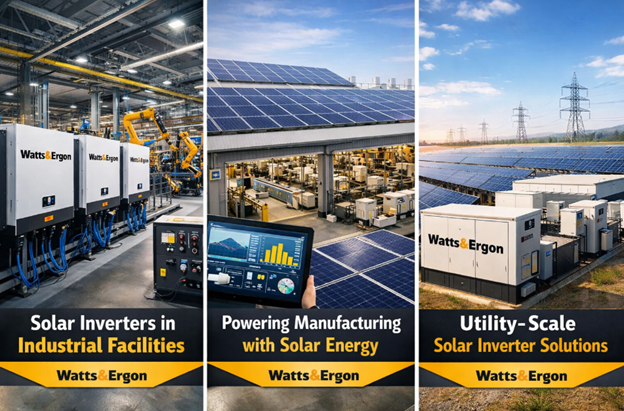
Industrial solar inverters from Watts & Ergon are engineered for high power capacities (hundreds of kW to multi-MW), extreme conditions, and continuous operation. They feature advanced cooling, modular scalability, multiple MPPT trackers, and smart grid-support functions.
Unlike residential models, our industrial inverters prioritize:
- Efficiency often above 98%
- Harmonic reduction and reactive power control
- Seamless integration with battery storage for hybrid systems
Types of Solar Inverters for Industrial Applications
Watts & Ergon offers a range of inverter technologies tailored to different industrial needs. Here’s a clear comparison:
| Inverter Type |
Best Suited For |
Key Advantages |
Typical Capacity |
Drawbacks |
| Central Inverters |
Large ground-mounted solar power plants serving industrial complexes |
High efficiency, lower cost per kW, simple installation for big arrays |
500 kW – Multi MW |
Less flexible with shading; single point of failure |
| String Inverters |
Factory rooftops, warehouses, commercial & industrial (C&I) projects |
Modular design, easier maintenance, multiple MPPT for partial shading |
50 kW – 250 kW+ per unit |
More units needed for very large systems |
| Hybrid Inverters |
Factories needing backup power or peak shaving |
Supports solar + battery storage, off-grid/island mode capability |
50 kW – MW scale |
Higher initial cost due to storage integration |
| Power Optimizers + String |
Complex rooftops with varying orientations |
Panel-level optimization, maximum energy yield |
Combined with string |
Additional components increase cost |
Key Industrial Applications of Solar Inverters
Watts & Ergon solar inverters are deployed across various industrial sectors:
- Powering Manufacturing Processes
Supply clean, stable AC power to motors, conveyor belts, pumps, robotic arms, and automated production lines in industries like automotive, textiles, food processing, and chemicals.
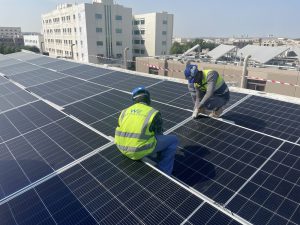
- Industrial Rooftop Solar Systems
Utilize vast factory and warehouse roofs for on-site power generation. Excess energy can be fed to the grid or stored in batteries, maximizing self-consumption.
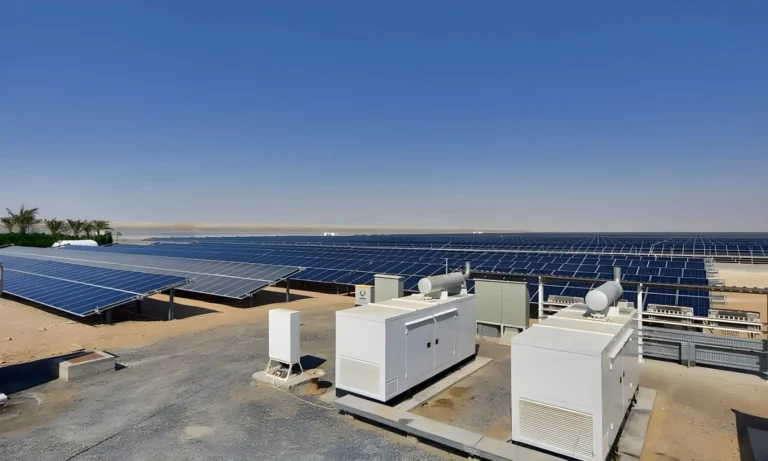
- Large-Scale Industrial Solar Power Plants
Ground-mounted systems dedicated to supplying dedicated power to industrial parks or nearby facilities using central or high-capacity string inverters.
- Hybrid Systems with Energy Storage
Combine solar generation with batteries for uninterrupted power during outages, peak demand management, and smoothing solar fluctuations — ideal for data centers and continuous-process industries.
- Remote and Off-Grid Operations
Provide reliable power to mining sites, oil & gas facilities, or agricultural processing units far from the grid.
- Grid Support and Ancillary Services
Smart inverters help stabilize local grids through reactive power compensation and voltage regulation.
Benefits of Using Watts & Ergon Solar Inverters in Industry
- Significant Cost Savings — Reduce electricity bills by 20–50%+ through high self-consumption and avoidance of peak demand charges.
- Energy Independence & Reliability — Hybrid systems ensure backup power, minimizing costly downtime during grid outages.
- Sustainability & ESG Compliance — Lower CO₂ emissions and support corporate green goals.
- High Efficiency & Scalability — Modular designs allow easy expansion as your business grows.
- Improved Power Quality — Deliver clean power with reduced harmonics, protecting sensitive industrial equipment.
- Fast Return on Investment — Typical payback periods of 3–7 years, depending on location, incentives, and energy prices.
- Advanced Monitoring — Real-time performance tracking for proactive maintenance and optimization.
Comparison: Solar Inverters vs Traditional Grid Power
| Benefit Area |
Solar Inverters (Watts & Ergon) |
Traditional Grid Power |
| Energy Cost |
20–50%+ reduction via self-generation |
Subject to rising tariffs & peak charges |
| Reliability |
Hybrid backup during outages |
Vulnerable to blackouts |
| Environmental Impact |
Near-zero emissions |
High carbon footprint |
| Power Quality |
Clean AC with low harmonics |
Can have fluctuations & surges |
| Long-term Savings |
25+ years of free solar energy after payback |
Continuous monthly bills |
Why Choose Watts & Ergon?
With a focus on durability, efficiency, and intelligent features, Watts & Ergon inverters are built to perform in harsh industrial environments (dust, heat, vibrations). Our team provides end-to-end support — from system design to monitoring — ensuring maximum uptime and returns.
Conclusion
Solar inverters are essential for modern industries transitioning to clean energy. Whether you need rooftop solutions, large-scale plants, or hybrid systems with storage, Watts & Ergon delivers reliable, high-performance inverters that drive cost savings, sustainability, and operational resilience.
Ready to power your factory with solar?
Contact Watts & Ergon for a Free Site Assessment
Keywords: industrial solar inverters, solar inverters for factories, Watts & Ergon solar inverters, C&I solar systems, hybrid inverters industrial, rooftop solar for manufacturing.