The global agricultural sector faces unprecedented challenges: rising energy costs, water scarcity, climate change, and the need for sustainable practices. In 2026, solar energy has emerged as a powerful solution, enabling farmers to achieve energy independence, lower operational expenses, and increase resilience.
With global agrivoltaics market projected to grow significantly (estimates range from USD 5.1 Bn to over USD 20 Bn in 2026 with strong CAGRs), dual-use solar systems are no longer experimental — they are mainstream. In the UAE and GCC region, where sunlight is abundant but water and arable land are limited, solar-powered agriculture offers transformative potential.
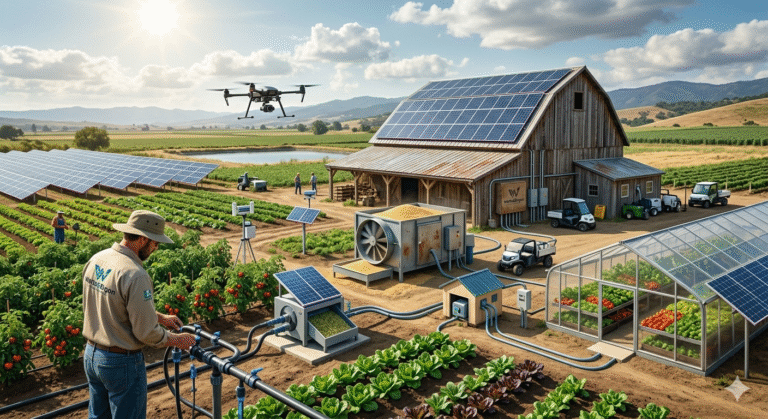
Agrivoltaics (also called Agri-PV or dual-use solar) involves co-locating solar energy production with agricultural activities on the same land. Instead of choosing between food and energy, farmers can produce both.
Key Benefits in 2026:
- Land Use Efficiency: Land Equivalent Ratio (LER) often exceeds 1.3–1.8, meaning more total productivity per hectare.
- Water Conservation: Panels provide shade that reduces evaporation by 14–50%, crucial in arid regions like the UAE.
- Crop Protection: Reduced heat stress, protection from hail/extreme weather, and improved microclimates.
- Additional Revenue: Energy sales or savings plus continued agricultural income.
- Environmental Gains: Lower CO₂ emissions, improved soil health, and support for pollinators.
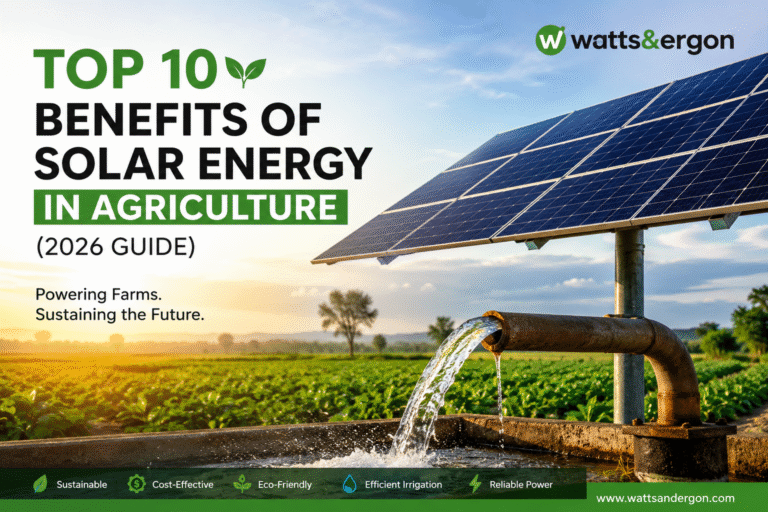
Irrigation accounts for a massive portion of farm energy use. Solar-powered pumps and drip systems eliminate diesel dependency and reduce costs by up to 80%.
In the UAE, Watts & Ergon has successfully deployed systems that replaced diesel pumps, delivering substantial savings and reliability. These systems are ideal for remote farms, date plantations, and greenhouses.
3. Other Solar Applications in Agriculture
Beyond agrivoltaics and irrigation, farmers use solar for:
- Solar dryers for post-harvest processing
- Solar-powered greenhouses with climate control
- Electric fencing and monitoring systems
- Cold storage and refrigeration units
- Desalination for irrigation water
4. Benefits for UAE and Middle East Farmers
The UAE’s harsh climate makes solar particularly valuable. High irradiance levels (over 2,000 kWh/m² annually) ensure excellent performance. Government initiatives, DEWA approvals, and net metering further enhance ROI.
Case studies from Watts & Ergon show farms achieving 15%+ yield increases and major fuel cost reductions.
5. Economic Analysis and ROI
Payback periods for solar agriculture systems typically range from 3–7 years, depending on scale and incentives. Long-term savings on energy and water create strong financial cases.
| Solution |
Key Benefits |
Best For |
Est. Payback Period |
Watts & Ergon Expertise |
| Agrivoltaics |
Dual income, water savings, crop protection |
Large farms, shade-tolerant crops, livestock |
5–8 years |
Design & integration |
| Solar Water Pumping |
Up to 80% cost reduction, reliability |
Irrigation, remote areas |
3–6 years |
DEWA-approved installations |
| Solar Greenhouses |
Climate control, year-round production |
High-value crops |
4–7 years |
Hybrid systems |
| Solar Dryers & Processing |
Reduced post-harvest losses |
Fruits, dates, herbs |
2–5 years |
Custom solutions |
| Hybrid Solar + Storage |
24/7 power, resilience |
Commercial farms |
6–9 years |
Full EPC services |
6. Implementation Guide: How to Go Solar for Your Farm
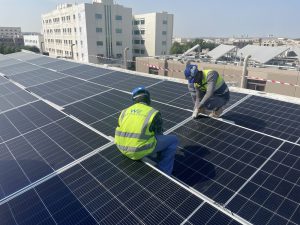
Steps include site assessment, load calculation, system design, permitting (DEWA in UAE), installation, and monitoring. Watts & Ergon provides end-to-end support as experienced farm solar EPC contractors.
7. Challenges and Solutions
Initial investment, technical knowledge, and maintenance are common concerns. High-quality components, warranties (25+ years), and professional partners like Watts & Ergon mitigate these risks.
8. Future Trends in 2026 and Beyond
Dynamic tracking panels, AI-optimized systems, integration with smart farming (IoT, drones), and policy support will drive further adoption. In the UAE, alignment with national sustainability goals accelerates growth.
As a trusted DEWA-approved and ISO-certified solar EPC contractor in Dubai, Watts & Ergon offers specialized agriculture solar solutions including water pumping, agrivoltaics, greenhouse systems, and maintenance. Our local expertise ensures systems perform optimally in the UAE climate.
Contact Watts & Ergon for a Free Farm Solar Assessment
Real-World Case Studies
Al Ain Date Farm: 45 kW solar pumping system reduced fuel costs by over AED 45,000 annually with 15% yield improvement.
Similar success stories continue across Sharjah, Fujairah, and other emirates.
Conclusion
Solar energy is revolutionizing agriculture in 2026, offering a path to sustainability, profitability, and resilience. For UAE farmers facing water scarcity and high energy costs, the transition to solar is not just beneficial — it is essential for future success.
Partner with experts like Watts & Ergon to harness these opportunities and secure a brighter, greener future for your farm.