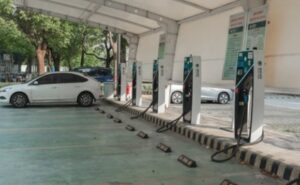
EV Charger Installation in Dubai: (2026 Guide)
At Watts & Ergon, a DEWA-approved solar and electrical contractor, we provide complete EV charger installation services for villas, apartments, offices, hotels, and commercial properties across Dubai.

At Watts & Ergon, a DEWA-approved electrical services company in Dubai, we use advanced thermal imaging as a core part of our electrical safety programs. This comprehensive guide explains how thermal scanning works, why it is essential for safety, and how it delivers real value to residential, commercial, and industrial clients across the UAE.
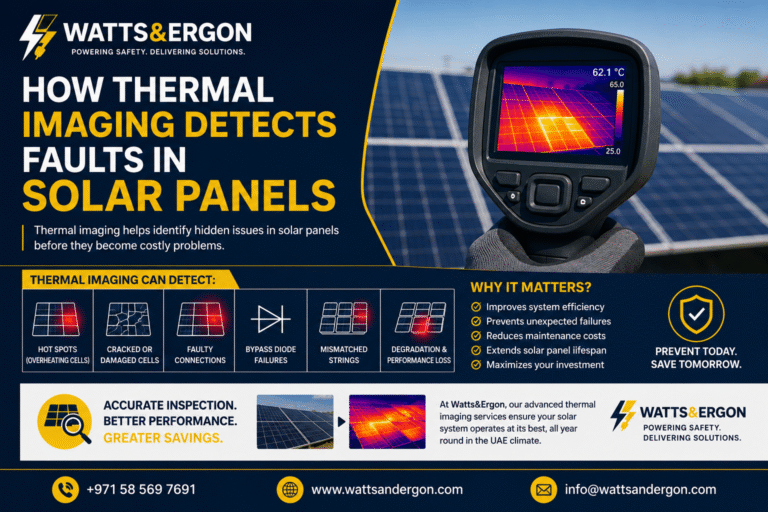
In the high-demand electrical environments of modern Dubai and the UAE, hidden problems in electrical systems can quickly turn into major safety hazards. Overheating connections, overloaded circuits, and failing components often remain invisible to the naked eye — until they cause equipment breakdown, electrical fires, or costly downtime.
Thermal Scanning, also known as Infrared Thermography, has become one of the most powerful non-invasive tools for predictive electrical maintenance. By visualizing heat patterns, it reveals potential failures long before they become dangerous.
At Watts & Ergon, a DEWA-approved electrical services company in Dubai, we use advanced thermal imaging as a core part of our electrical safety programs. This comprehensive guide explains how thermal scanning works, why it is essential for safety, and how it delivers real value to residential, commercial, and industrial clients across the UAE.
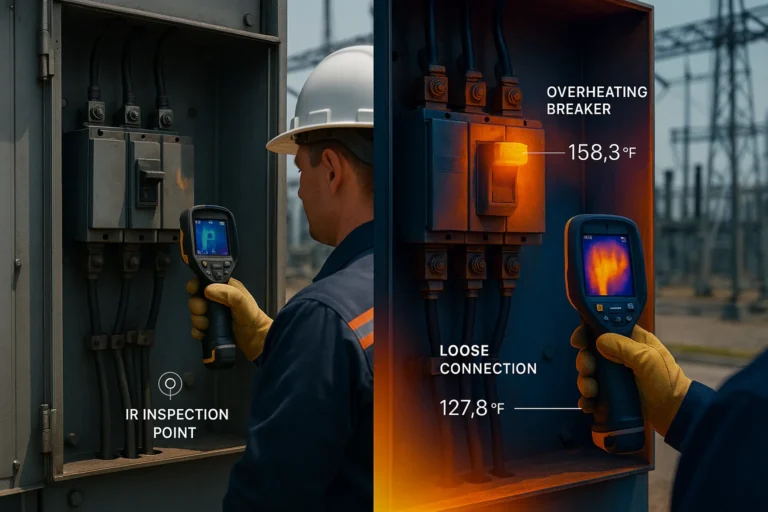
Thermal scanning uses infrared cameras to detect and measure heat emissions from objects. Every object emits infrared radiation based on its temperature. These cameras convert that radiation into visible thermal images (thermograms) where different colors represent temperature variations.
In electrical systems, abnormal heat is usually a warning sign of problems such as:
Electrical resistance increases when connections loosen or corrode. Higher resistance produces more heat (I²R losses). Thermal cameras detect these temperature anomalies with high precision, often identifying issues at temperatures as low as 5–10°C above normal.
Our technicians at Watts & Ergon follow strict international standards (NFPA 70B, ISO 6781, and ASTM E1934) during scans to ensure accurate, repeatable results.
Electrical faults are among the leading causes of fires in buildings. In the UAE’s extreme summer heat, the risk increases significantly due to higher loads on air conditioning and refrigeration systems.
Thermal scanning helps prevent:
| Problem | Thermal Signature | Potential Risk | Typical Locations |
|---|---|---|---|
| Loose Connections | Hot spots at terminals | Arcing, fire | Distribution Boards, MCCs |
| Overloaded Circuits | Uniform heating of cables/breakers | Insulation failure | Sub-DBs, main panels |
| Phase Imbalance | One phase significantly hotter | Motor burnout | Industrial panels |
| Failed Capacitors | Localized heating | Power factor issues | PF correction panels |
| Harmonics | Heating in neutral conductors | Transformer overheating | Data centers, offices |
| Corrosion | Irregular hot spots | Increased resistance | Outdoor panels, coastal areas |
| Sector | Key Applications | Recommended Frequency |
|---|---|---|
| Residential Villas | Main DB, AC units, lighting circuits | Annually |
| Commercial Offices | Distribution boards, UPS systems, server rooms | Every 6 months |
| High-Rise Buildings | Riser rooms, floor DBs, elevators | Quarterly |
| Industrial Facilities | Motor Control Centers (MCCs), transformers | Quarterly |
| Data Centers & Hospitals | Critical power paths, PDUs, generators | Every 3 months |
| Hotels & Retail | Kitchen panels, HVAC switchboards | Every 6 months |
Modern thermal cameras use color palettes where:
Watts & Ergon, reports include both thermal and visual side-by-side images with exact temperature readings and analysis.
Case Study 1: JLT Commercial Tower
During a routine thermal scan, our team identified a loose connection in the main distribution board showing a 48°C temperature rise. The issue was fixed during a scheduled shutdown, preventing what could have been a major fire incident during peak summer load.
Case Study 2: Jebel Ali Industrial Plant
Thermal scanning revealed overheating busbars in an MCC panel due to harmonic distortion. After installing harmonic filters, temperature dropped by 35°C, extending equipment life and reducing energy bills by 8%.
Case Study 3: Luxury Villa Community
Multiple villas showed overloaded sub-DBs from additional EV chargers and AC units. Early detection allowed safe upgrades before circuit failures occurred.
| Aspect | Traditional Methods | Thermal Scanning |
|---|---|---|
| Detection Timing | After failure or during shutdown | Early prediction under load |
| Downtime Required | High | Minimal |
| Safety Risk | Higher (live work) | Lower |
| Cost Effectiveness | Reactive & expensive | Proactive & economical |
| Documentation | Limited | Visual reports with data |
Thermal scanning perfectly complements the Electrical DB Maintenance programs we discussed in our previous guide. While physical cleaning and torque checks are essential, thermal imaging adds a predictive layer that catches issues that visual inspection alone would miss.
Not all thermal imaging services are equal. Look for providers who:
Watts & Ergon is a trusted DEWA-approved and ISO-certified electrical contractor in the UAE. Our thermal scanning services include:
Watts & Ergon — Empowering Sustainable Progress with Safe Electrical Solutions.
📍 Dubai, UAE | DEWA Approved Contractor | ISO Certified
At Watts & Ergon, a DEWA-approved solar and electrical contractor, we provide complete EV charger installation services for villas, apartments, offices, hotels, and commercial properties across Dubai.
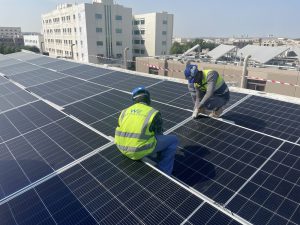
At Watts & Ergon, a DEWA-approved and ISO-certified solar EPC contractor, we specialize in designing and installing high-performance rooftop solar systems tailored specifically for warehouses, distribution centers, and industrial facilities across Dubai and the UAE.
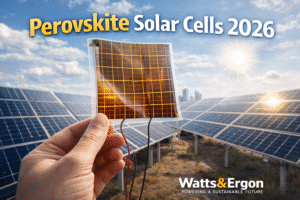
At Watts & Ergon, a DEWA-enrolled, ISO-certified solar EPC contractor, we design and install systems specifically engineered for UAE conditions. Here’s what actually works in 2026.