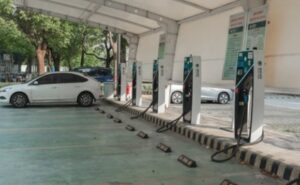
EV Charger Installation in Dubai: (2026 Guide)
At Watts & Ergon, a DEWA-approved solar and electrical contractor, we provide complete EV charger installation services for villas, apartments, offices, hotels, and commercial properties across Dubai.

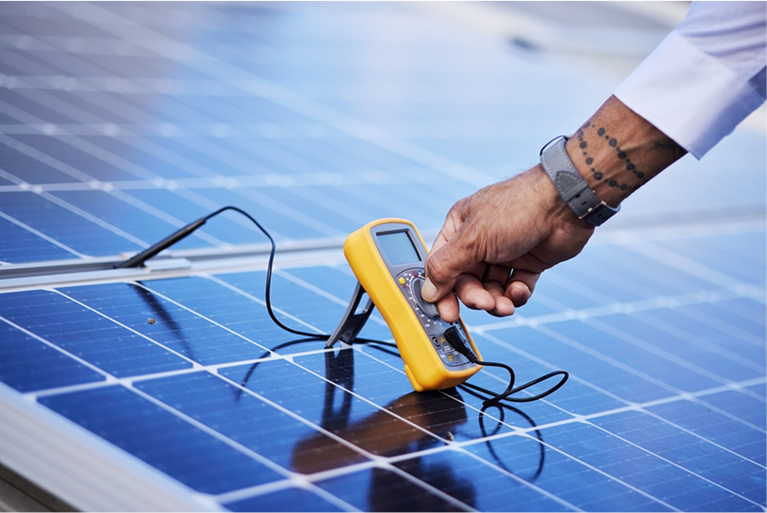
In sunny Dubai and across the UAE, solar panels are an excellent way to generate clean electricity and reduce DEWA bills. But one of the most common questions homeowners ask is: “How much electricity can solar panels generate per day?”
The answer depends on several factors — system size, panel efficiency, peak sun hours, weather conditions, and maintenance. In the UAE, with its world-class solar resources, a well-designed system can produce impressive daily output, often enough to cover a large portion of a villa’s energy needs.
At Watts&Ergon, a trusted DEWA-approved solar specialist in Dubai, we design systems that maximize daily generation even in the challenging desert environment.
The UAE enjoys some of the highest solar resources globally. Average peak sun hours (the equivalent hours when sunlight intensity is 1000 W/m²) range from 5.5 to 6 hours per day annually, with higher values in summer.
This makes Dubai and the UAE far more productive for solar than many European or North American locations.
The standard way to estimate daily output is:
Daily Output (kWh) = System Size (kW) × Peak Sun Hours × System Efficiency Factor
The efficiency factor (typically 0.75 – 0.85) accounts for losses from temperature, dust, inverter efficiency, wiring, and shading.
For a 10 kW system in Dubai with 5.8 peak sun hours and 80% overall efficiency:
10 kW × 5.8 hours × 0.80 = 46.4 kWh per day (average)
In peak summer months, this can rise to 60+ kWh/day, while winter may drop to 35–45 kWh/day.
| System Size (kW) | Typical Home | Average Daily Output (kWh) | Monthly Output (kWh) | Annual Output (kWh) |
|---|---|---|---|---|
| 5 kW | Small apartment / 2-3BR villa | 27 – 32 kWh | 810 – 960 | 9,800 – 11,700 |
| 8 kW | Medium 3-4BR villa | 44 – 52 kWh | 1,320 – 1,560 | 16,000 – 19,000 |
| 10 kW | Standard 4BR villa | 55 – 65 kWh | 1,650 – 1,950 | 20,000 – 23,700 |
| 12–15 kW | Large 5BR villa | 66 – 97 kWh | 1,980 – 2,910 | 24,000 – 35,000+ |
| 20 kW | Luxury villa / small commercial | 110 – 130 kWh | 3,300 – 3,900 | 40,000 – 47,500 |
*Based on 5.5–6.5 peak sun hours and real-world performance data for Dubai (accounting for dust, heat, and system losses). Actual output varies by roof orientation, tilt, and maintenance.
Modern monocrystalline and bifacial panels (20–23%+ efficiency) perform best in the UAE. Bifacial panels capture reflected light from sand, boosting output by 10–25%.
High temperatures reduce panel efficiency (about 0.3–0.5% loss per °C above 25°C). However, the UAE’s intense sunlight more than compensates for this effect.
Dust can reduce output by up to 20–30% without regular cleaning. Professional cleaning every 1–3 months is recommended in Dubai.
South-facing roofs with minimal shading deliver maximum generation. East or west orientations still perform well but produce slightly less.
High-quality hybrid inverters convert DC to AC with over 95–98% efficiency, minimizing losses.
A typical 4BR villa consuming 8,000–10,000 kWh per month might install a 10–12 kW system. With average daily generation of 55–70 kWh, this can offset 60–85% of electricity use, especially when combined with smart energy management and net metering under Shams Dubai.
Many Watts&Ergon clients report generating enough during peak daytime hours to run multiple air conditioners, pool pumps, and household appliances while exporting excess to the grid for credits.
As a DEWA-approved solar expert in Dubai, Watts&Ergon designs systems that deliver maximum daily kWh output tailored to your roof, consumption pattern, and budget. We use premium components optimized for UAE conditions, provide accurate production forecasts, and handle full DEWA approvals and installation.
Contact Watts&Ergon today and discover exactly how much electricity your rooftop can generate every day.
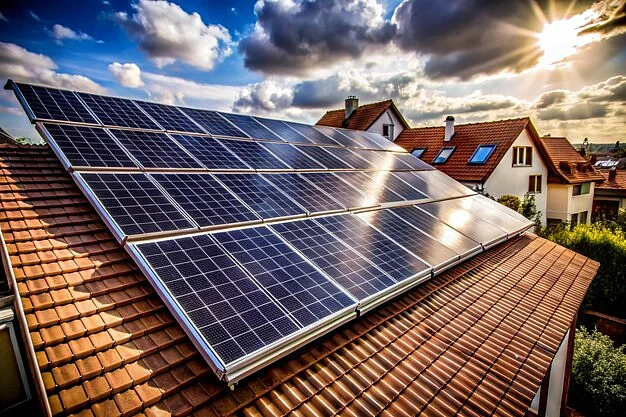
At Watts & Ergon, a DEWA-approved solar and electrical contractor, we provide complete EV charger installation services for villas, apartments, offices, hotels, and commercial properties across Dubai.
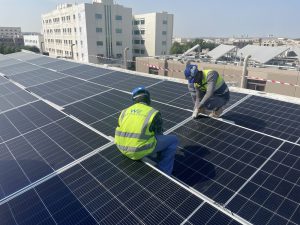
At Watts & Ergon, a DEWA-approved and ISO-certified solar EPC contractor, we specialize in designing and installing high-performance rooftop solar systems tailored specifically for warehouses, distribution centers, and industrial facilities across Dubai and the UAE.
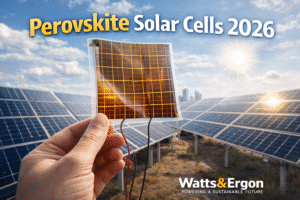
At Watts & Ergon, a DEWA-enrolled, ISO-certified solar EPC contractor, we design and install systems specifically engineered for UAE conditions. Here’s what actually works in 2026.